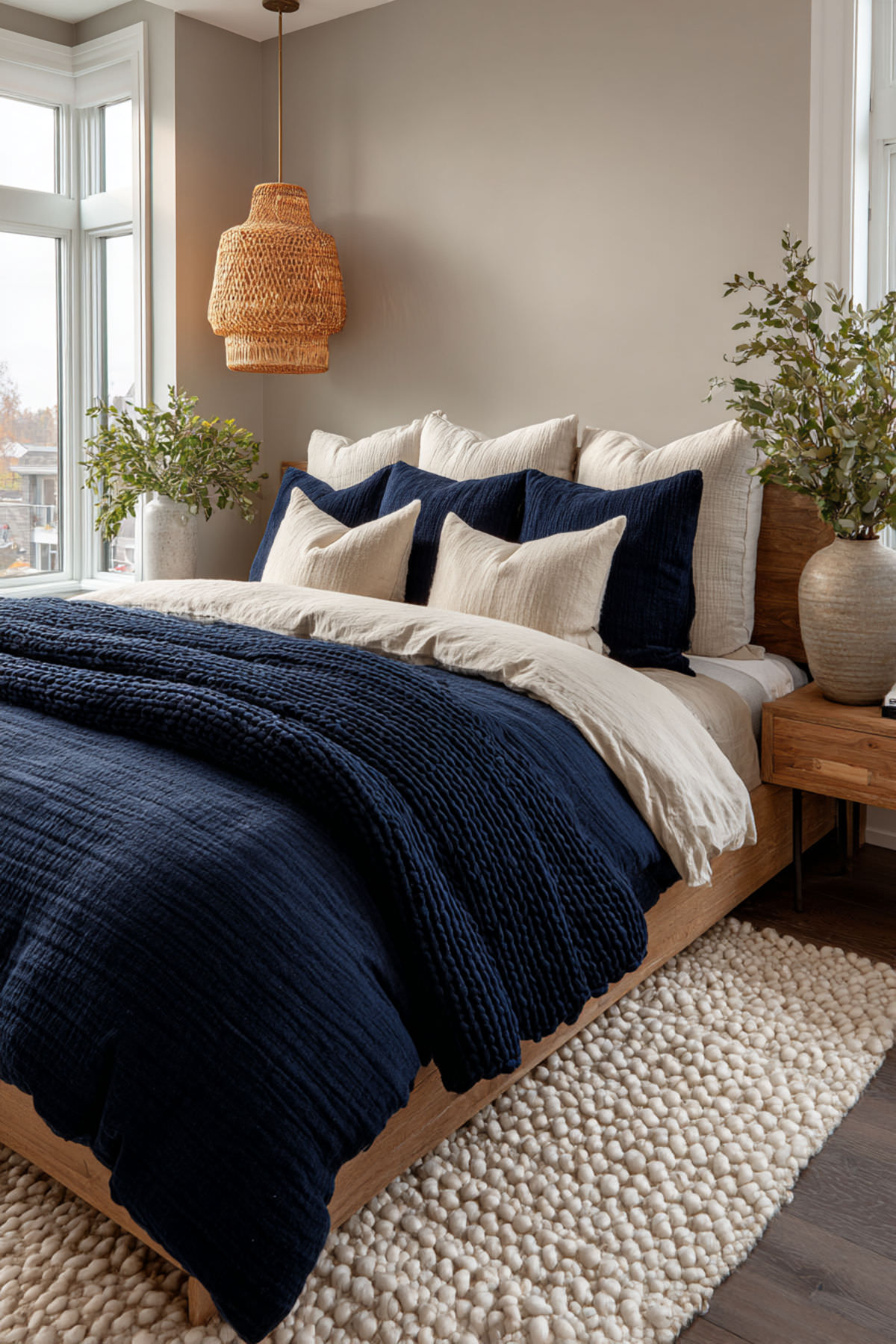
Slow living isn’t a trend you follow — it’s a decision you make when the pace of everything else starts costing you something real. Sleep. Presence. The ability to sit in a room without reaching for your phone. And at some point, you look at your bedroom — the room where you’re supposed to recover from all of it — and realize it doesn’t match the life you’re trying to build. The colors are too sharp or too cold. The surfaces are covered in things that don’t mean anything. The room moves at the same speed as the rest of your day, and you need it to slow down.
Earth tones solve this problem in a way that no other palette can, because earth tones are literally the colors of slowness. Warm beige, terracotta, clay, taupe, muted olive, soft brown — these are the colors of soil, stone, bark, dried grass, late afternoon light. They don’t stimulate. They don’t demand attention. They ground you, and grounding is what slow living is actually about. The 2026 interior design landscape reflects this shift dramatically: designers report overwhelming demand for earthy, nature-inspired palettes as homeowners move away from the gray-and-white minimalism that dominated the last decade. Benjamin Moore named Silhouette (a rich espresso brown) as their 2026 Color of the Year, and Behr chose Hidden Gem (a smoky jade).
Both signal the same thing: people want warmth, depth, and connection to the natural world. These 19 bedroom ideas are built for women who are already on that path. Product recommendations and specific guidance throughout. Pin the ones that feel like home. This content provides aesthetic inspiration rather than scientific conclusions, and certain examples may be fictional.
Warm Beige Walls as a Living Canvas: The Slow Living Foundation

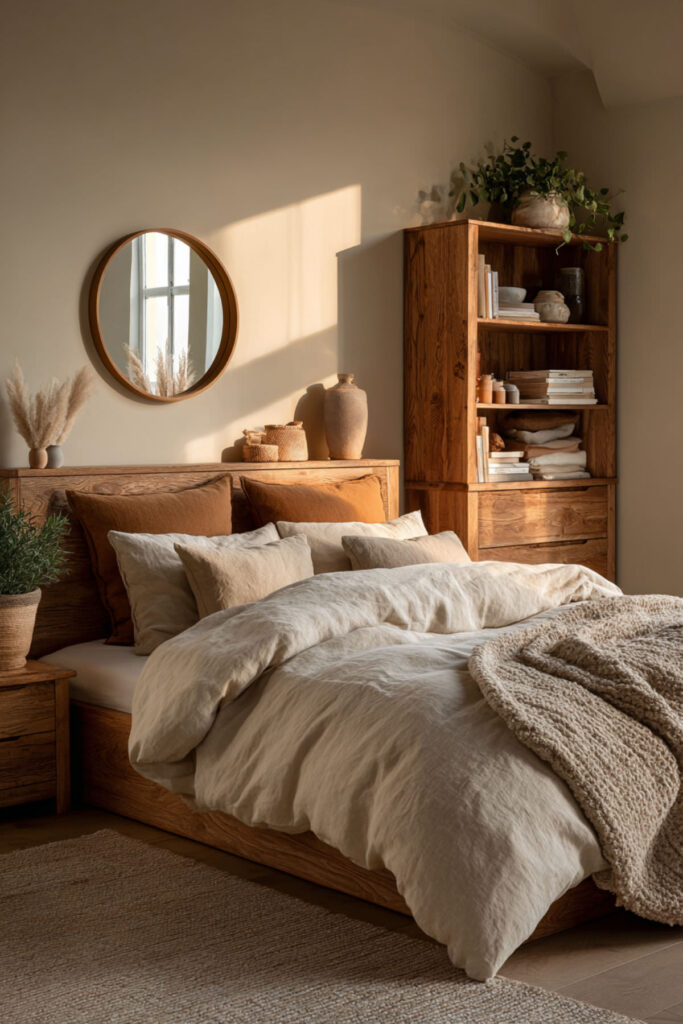
Warm beige on every wall is the single most transformative first step in an earth-toned bedroom. Not bright white (which reads clinical), not cool grey (which reads corporate), but a beige with warm undertones — sand, wheat, linen — that makes the room feel like it’s been touched by late afternoon sun at all times of day. The warmth in the color relaxes the eye, which relaxes the body, which is the point. Matte or eggshell finish absorbs light rather than bouncing it, keeping the room soft even when the overhead fixture is on. I recommend a warm beige interior wall paint in matte or eggshell finish on all four walls — look for names that reference natural materials (“sandstone,” “linen white,” “wheat”). This earthy bedroom and natural bedroom colors idea is the foundation that every other earth-toned element in the room will build upon.
Linen Bedding in Oat and Cream: The Textile That Gets Better with Time
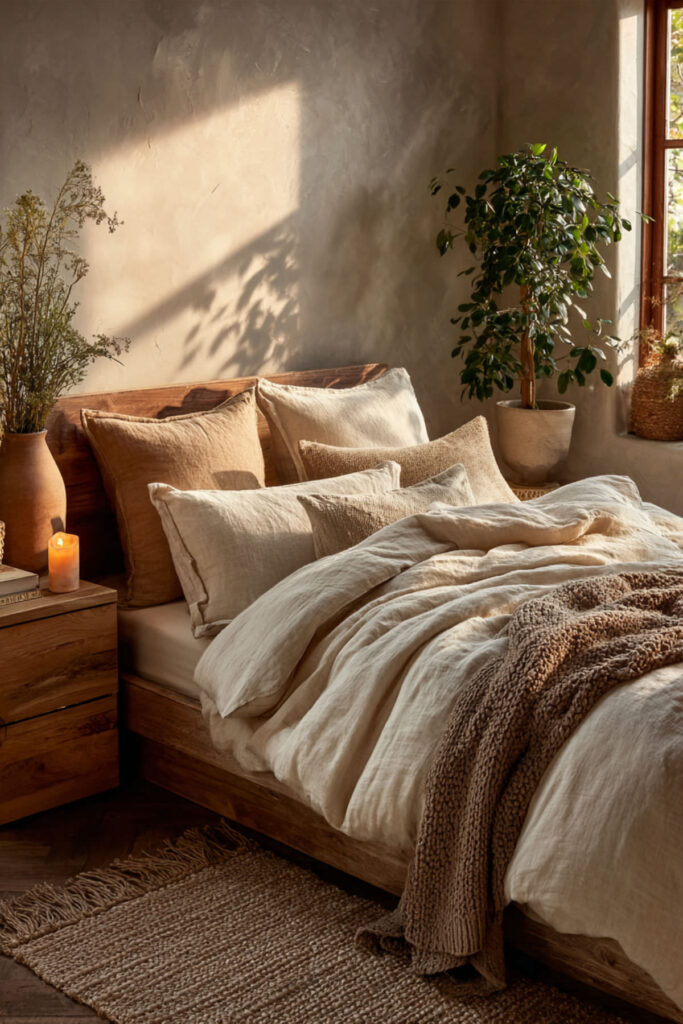
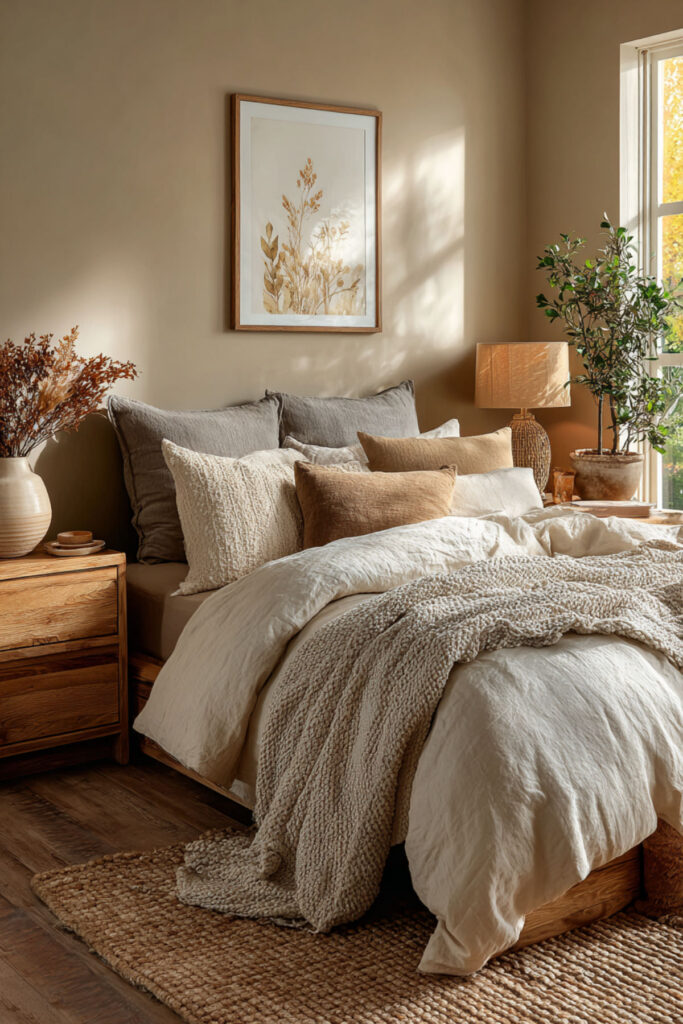
Linen is the textile equivalent of slow living. It’s made from flax — one of the most sustainable fibers on the planet — and unlike synthetic bedding that degrades with washing, linen gets softer, more beautiful, and more comfortable every single time you wash it. The slightly rumpled texture of linen says “this bed is lived in” without saying “this bed is messy,” and its natural temperature regulation (cool in summer, warm in winter) means you sleep better without doing anything differently. An oat or cream linen duvet cover with matching sheets creates a bed that looks effortlessly beautiful and feels like a reward at the end of the day. I recommend a 100% European flax linen duvet cover and sheet set in oat, natural, or warm cream — pre-washed for immediate softness. This linen bedding and linen sheet sets idea is the one textile upgrade that will make your bed feel fundamentally different.
Solid Wood Bed Frame with Visible Grain: Furniture That Tells a Story
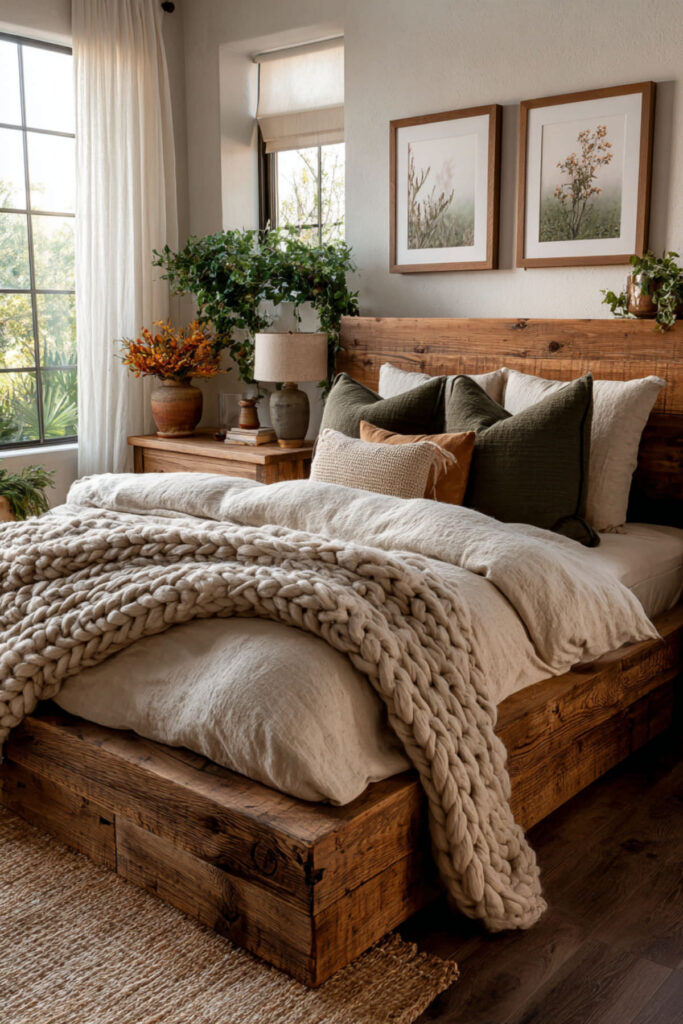
In slow living, the things you own should age well — and nothing ages more beautifully than solid wood. A bed frame made from real oak, walnut, or ash develops a deeper color and richer grain pattern over the years, which means your bed literally becomes more beautiful the longer you keep it. That’s the opposite of particle board, which chips and peels and looks worse with every move. The visible wood grain adds organic visual texture to the room without adding any visual clutter, and the weight of solid wood makes the bed feel permanent and grounding in a way that lighter frames can’t. I recommend a solid wood platform bed frame in oak, walnut, or ash with a simple profile and visible grain — no heavy ornamentation, no paint, just the wood itself. This wood bedroom inspo and wood inspired bedroom idea is the centerpiece that makes the room feel rooted.
⫸ Click Here For Best Selling Sublimation Printers And Products ⫷Terracotta Accent Wall: Earth and Fire in One Warm Stroke
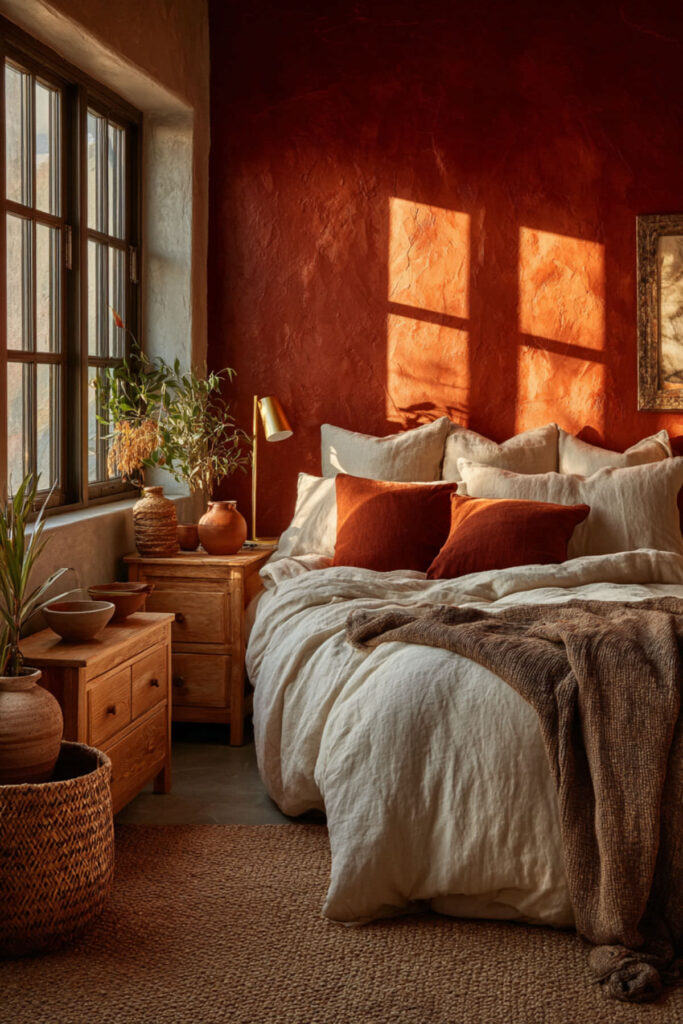
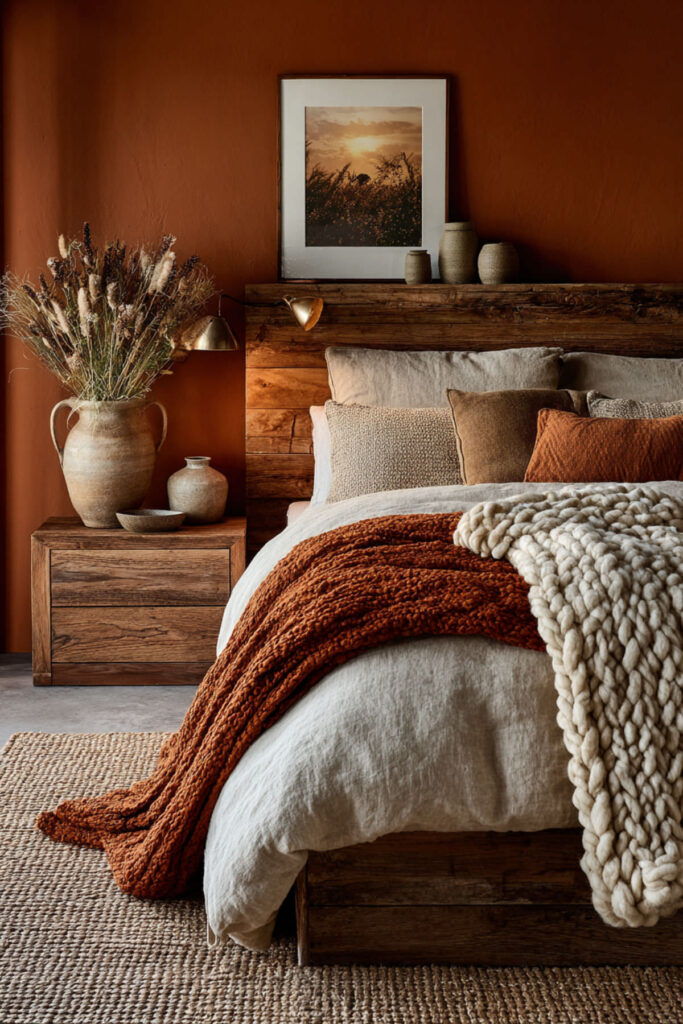
Terracotta — the color of fired clay, sun-baked adobe, and ancient pottery — brings warmth and life to an earth-toned bedroom without any of the overstimulation that brighter colors create. As an accent wall behind the bed, terracotta creates a focal point that feels both ancient and entirely modern, grounding the room with a warmth that beige alone can’t achieve. It pairs beautifully with cream, warm white, olive, and every shade of brown, and it makes natural wood furniture look like it was always meant to sit against that wall. I recommend a warm terracotta paint in matte finish on one accent wall behind the bed, with warm beige or cream on the remaining walls. This earthy terracotta bedroom and earthy tone bedroom ideas concept adds the depth and character that separates a slow living bedroom from a beige bedroom.
Olive Green Textiles: The Grounding Color of the Natural World

Olive green is the earth tone that most people overlook, and it’s arguably the most emotionally grounding of all of them. It’s the color of aged leaves, of lichen on stone, of olive groves at dusk — and its muted, warm-cool hybrid quality makes it the perfect complement to beige, cream, terracotta, and warm brown. Olive green in the bedroom works best as a textile accent rather than a wall color: a throw blanket, a pair of pillow covers, a set of curtains. It adds nature-connection and visual depth without shifting the room’s warm base. I recommend olive green linen or cotton throw pillows (two to three) and one olive green throw blanket layered on a cream or oat bedding base. This olive green bed room and bedroom decor olive green idea brings the most grounding natural tone into the room without requiring any paint.
Handmade Ceramics on the Nightstand: Objects with Fingerprints
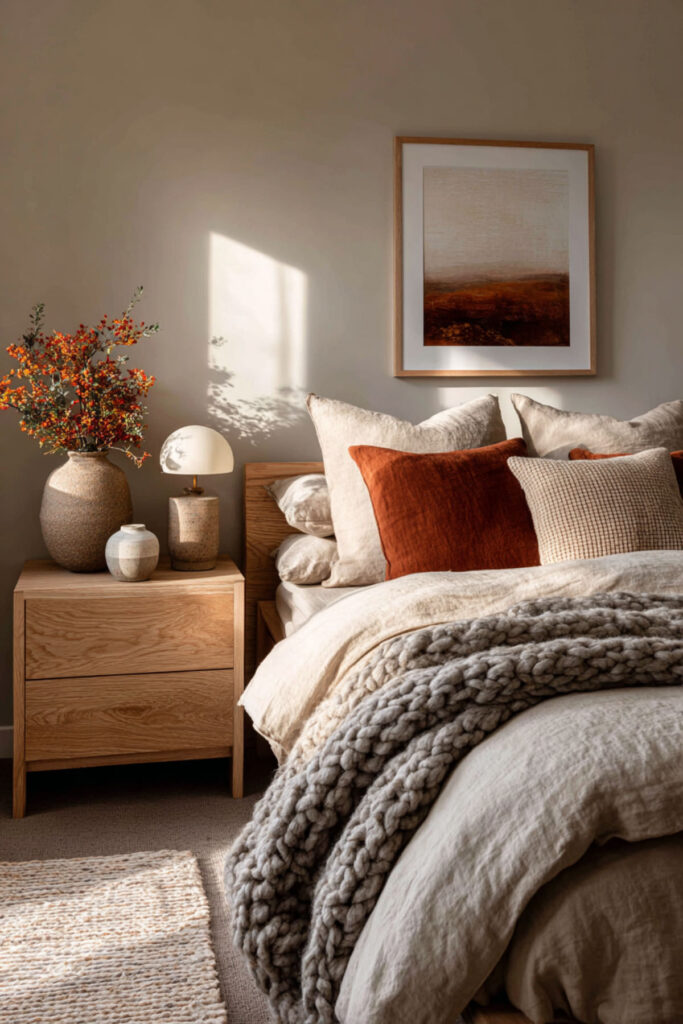
Slow living values objects that were made by hands, not machines — and handmade ceramics are the most accessible way to bring that value into a bedroom. A hand-thrown vase, an irregular-shaped dish for jewelry, a ceramic cup for water — these objects carry the visible evidence of their making (uneven edges, slight asymmetry, glaze variations) and that evidence is what gives them soul. They connect the room to craft traditions, to human touch, and to the wabi-sabi principle that imperfection is more beautiful than perfection. I recommend one to three handmade ceramic pieces in muted earth tones (cream, sand, warm grey, muted terracotta) placed on the nightstand and dresser — look for small studios, independent potters, or fair-trade artisan cooperatives. This earthy room decor and organic decor idea adds the human element that manufactured decor can’t replicate.
Jute or Sisal Rug Beside the Bed: Texture the Earth Gave You
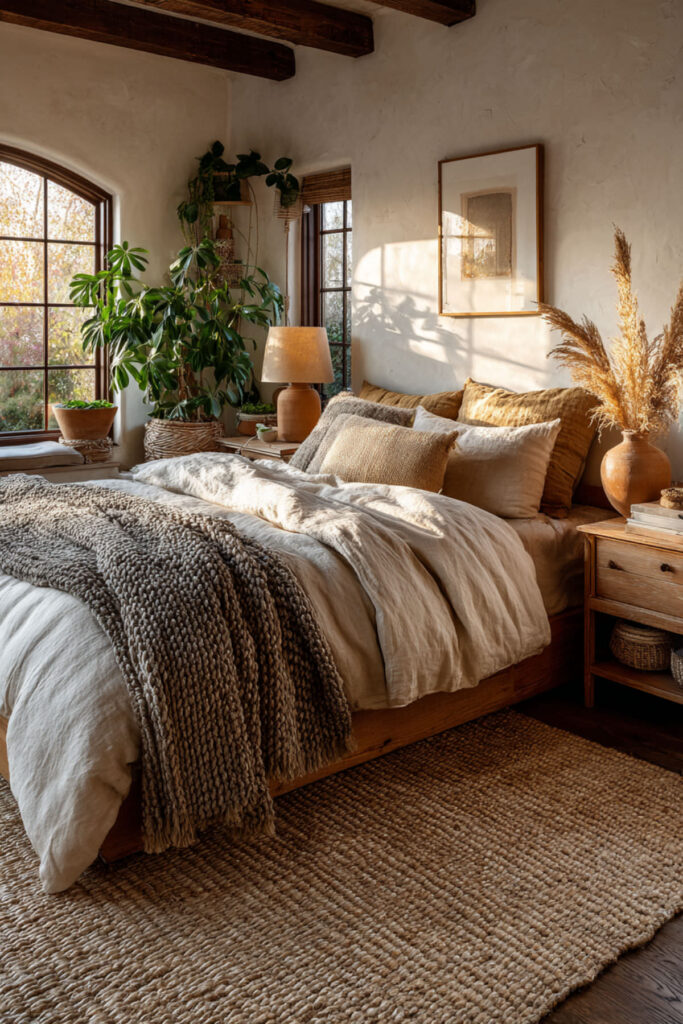
A natural fiber rug — jute, sisal, or seagrass — placed beside the bed adds a layer of organic texture that connects your feet to the earth the moment you step out of bed each morning. The weave pattern is complex enough to be visually interesting but neutral enough to never compete with other elements in the room. And the material itself is sustainable, biodegradable, and gets better with wear — the fibers soften and the rug develops the kind of lived-in character that slow living celebrates. I recommend a jute or sisal area rug in a natural tan or warm honey tone, large enough to extend at least two feet on each side of the bed. This earthy bedroom aesthetic and earth tone room aesthetic idea is the grounding layer that makes every morning’s first step feel intentional.
Warm Ambient Lighting with Linen or Rattan Shades: Light That Feels Like Sunset
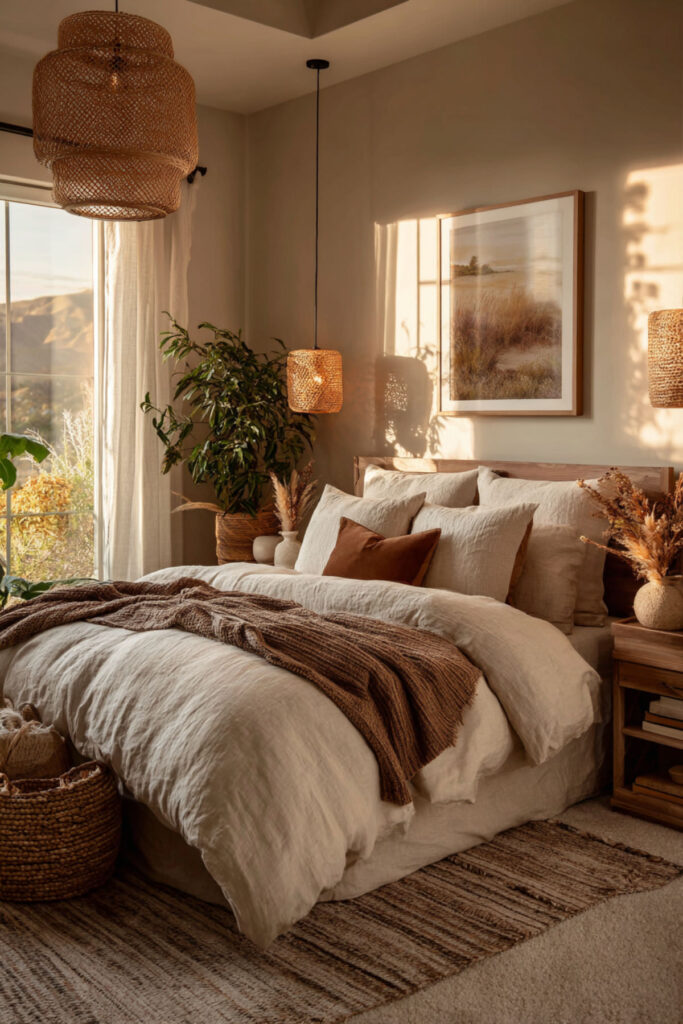
The quality of light in a slow living bedroom matters as much as the color of the walls. Overhead fluorescent or bright LED light creates the opposite of calm — it’s sharp, flat, and activating. Warm ambient light filtered through natural materials (linen shades, rattan pendants, woven lamp bases) creates soft, dappled illumination that mimics late afternoon sunlight filtering through trees. Forest Homes, a biophilic design studio, describes this as “dappled light” — the kind that instantly warms a room and softens every surface. I recommend table lamps with linen or rattan shades and 2700K warm LED bulbs on each nightstand, plus one floor lamp or pendant in natural material for ambient fill. This warm tones bedroom ideas and cozy warm bedroom aesthetic idea turns the room’s lighting into an extension of the earth-toned palette.
Dried Botanical Arrangements: Nature That Stays Without Maintenance
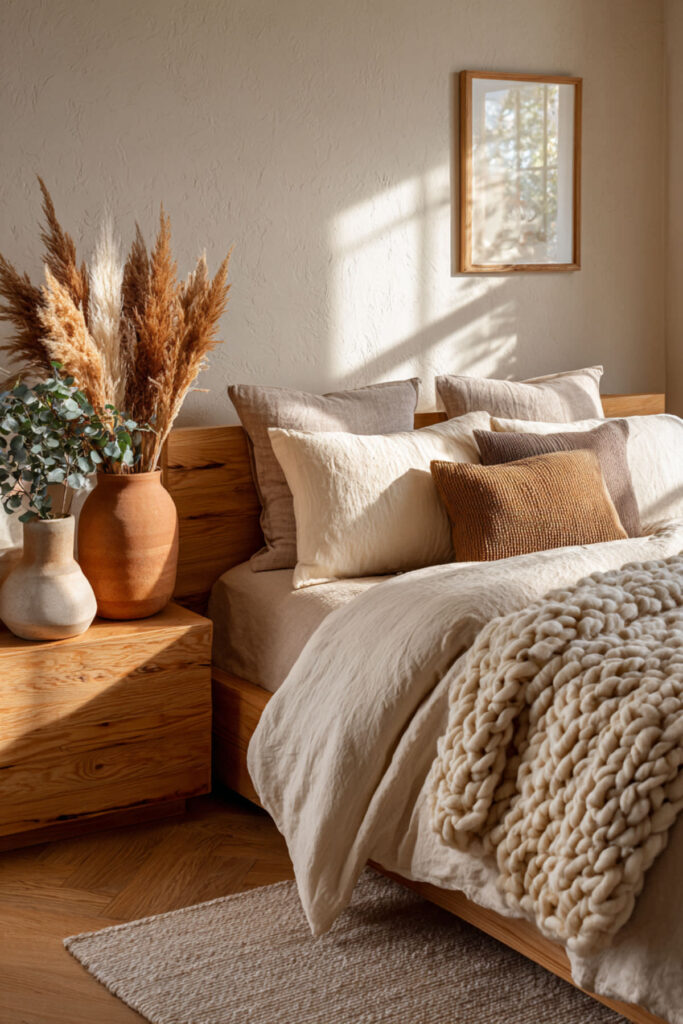
Dried grasses, preserved eucalyptus, dried lavender, pampas grass — these bring nature into the room without requiring watering, sunlight, or the guilt that comes when a live plant dies on your watch. Dried botanicals have a muted, earth-toned quality that fresh flowers don’t (no bright colors competing with the palette), and their slightly imperfect, textured forms align perfectly with the wabi-sabi philosophy that underpins slow living design. A single tall arrangement in a ceramic vase on the dresser, or a small bundle of dried lavender on the nightstand, adds organic life without adding maintenance to your morning. I recommend one statement dried botanical arrangement (pampas grass, dried grasses, or preserved eucalyptus) in a handmade ceramic or stoneware vase, plus one smaller dried bundle on the nightstand. This nature aesthetic room and nature bedroom aesthetic idea keeps nature present in the room without requiring the ongoing care that live plants demand.
Sage Green Walls for an Earthy-Cool Balance: Calm Without Coldness
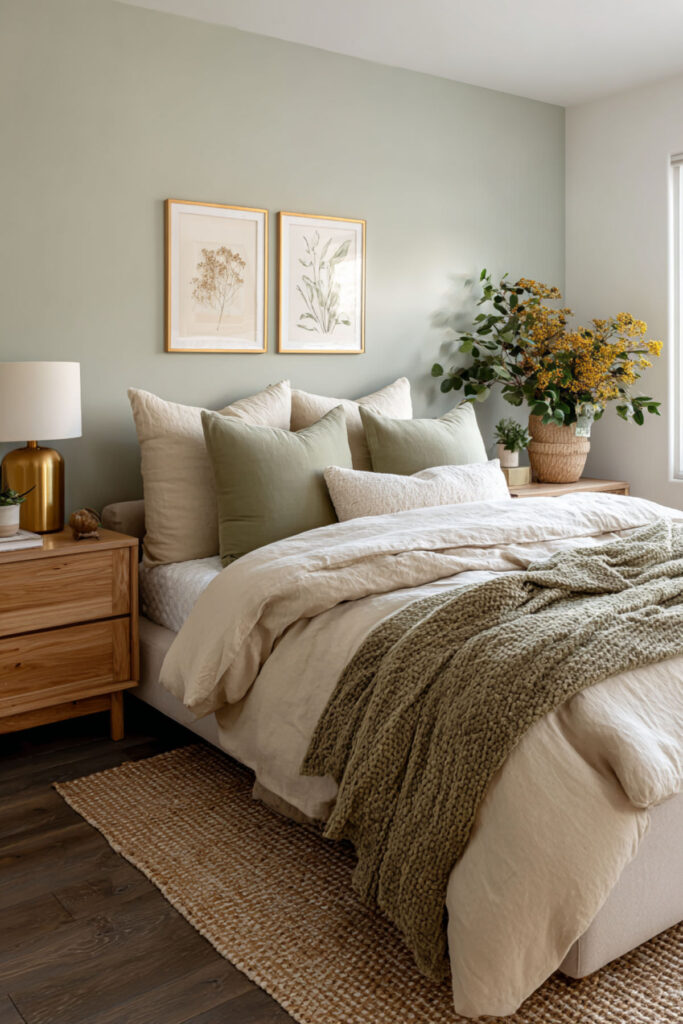
While most earth tones run warm, sage green brings a cool balance that prevents the room from feeling heavy or dark. Sage is still fundamentally an earth tone — it’s the color of dried herbs, silvery-green garden plants, and morning mist over a meadow — but its cool undertone opens the room visually and pairs beautifully with warm beige, cream, and natural wood. In 2026, muted greens (sage, olive, moss) are among the most popular bedroom colors because they connect the room to nature while maintaining the calm that warm neutrals alone can’t achieve. I recommend sage green in matte finish on all four walls or as a single accent wall, paired with cream bedding, warm wood furniture, and natural-fiber textiles. This sage green bed room and calming green bedroom colors idea creates the earthy-cool hybrid that keeps a slow living bedroom feeling fresh rather than heavy.
Wooden Headboard with Live Edge or Reclaimed Character: The Natural Focal Point
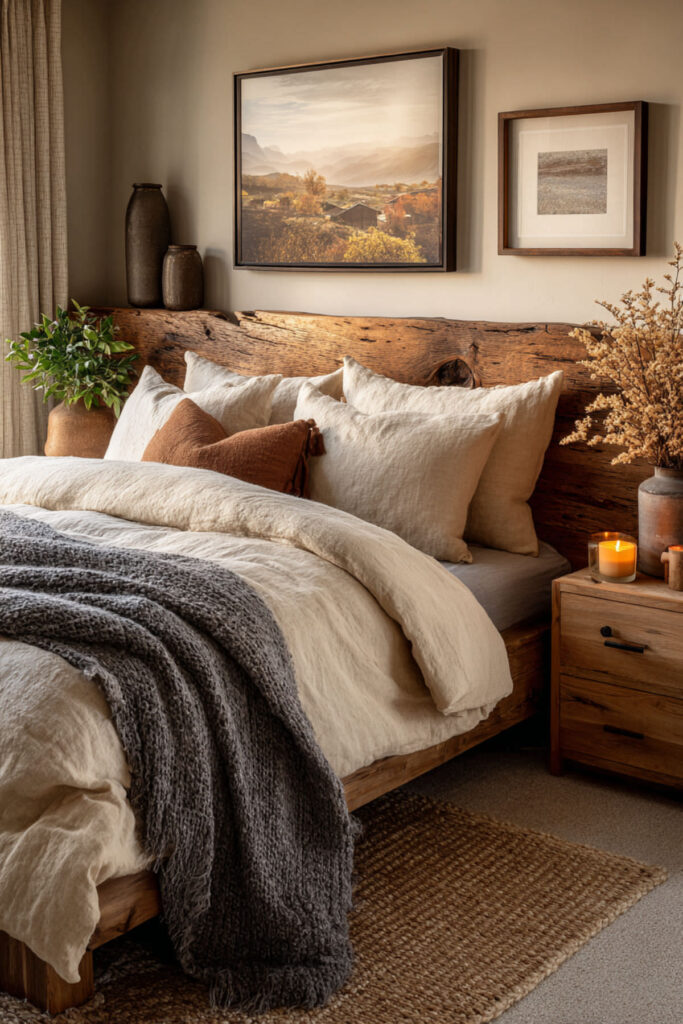
A wooden headboard — especially one with a live edge, reclaimed character, or visible knots and grain — becomes the room’s most expressive natural element. It’s art and function combined: the organic shape and wood grain pattern draw the eye without requiring a frame, and the material itself tells a story (where the tree grew, how it was milled, what marks time left on it). Cedar, walnut, and reclaimed oak are especially beautiful for headboards because their grain patterns are dramatic enough to stand alone. I recommend a solid wood headboard in cedar, walnut, or reclaimed oak with visible grain and natural edge character — mount it directly on the wall behind the bed as a statement piece. This wood headboard and cedar headboard and rough hewn wood idea gives the room a focal point that’s entirely natural, entirely unique, and gets more beautiful with age.
Earth-Tone Color Palette Strategy: Three Layers of Nature
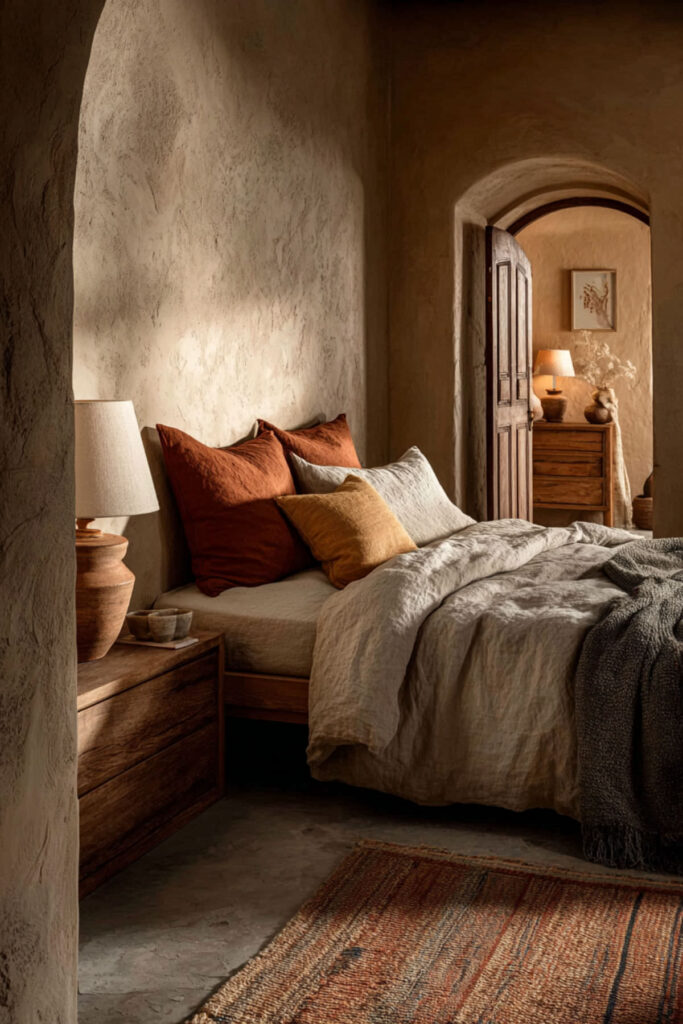
An effective earth-toned bedroom uses three layers of color, each drawn from nature. Layer one is the base: the wall color and the largest textile surfaces (duvet, curtains). This should be the lightest, most neutral earth tone — warm beige, cream, or soft sand. Layer two is the mid-tone: the secondary textiles and medium-sized furniture (throw blanket, accent pillows, nightstand, rug). This should be slightly warmer and deeper — taupe, warm brown, muted olive. Layer three is the accent: the smallest, darkest elements (ceramic pieces, art, one or two decor objects). This should be the richest earth tone — terracotta, espresso, deep olive, charcoal brown. I recommend building your palette in these three layers from light to deep, with each layer covering less surface area than the one before it. This earthy color palette and nature color palette and earthy bedroom color scheme idea is the strategy that makes an earth-toned room feel layered and natural rather than flat and monochrome.
Uncluttered Surfaces with One Intentional Object: The Visual Exhale
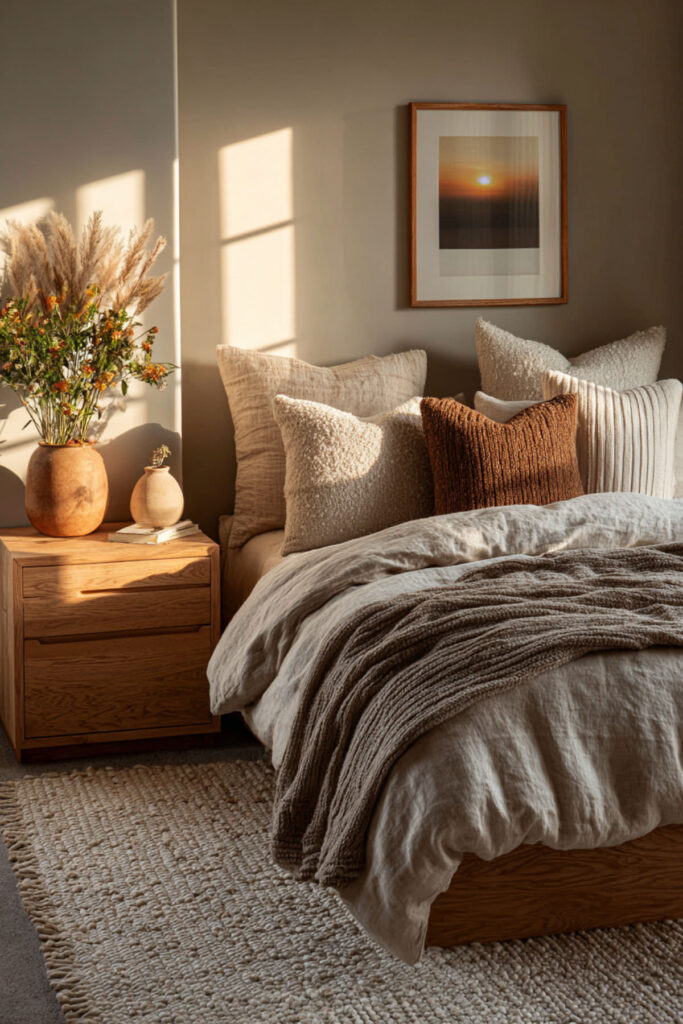
Slow living and clutter are fundamentally incompatible. Every unnecessary object on a surface creates a micro-demand on your attention — a tiny “deal with me” signal that your brain has to process even when you’re not consciously looking at it. Multiplied across a nightstand, dresser, and shelf, those micro-demands create the visual equivalent of background noise, and background noise prevents rest. The slow living approach: each surface gets one intentional object (a ceramic vase, a candle, a single book, a plant) and nothing else. I recommend a “one per surface” guideline for the nightstand, dresser top, and each shelf — choose the one object that brings you the most calm or meaning, and clear everything else into drawers or closed storage. This minimalist bedroom and modern cozy minimalist bedroom idea is the discipline that turns a decorated room into a genuinely peaceful one.
Cream and Forest Green Bedroom: The Two-Tone Nature Room

Cream and forest green together create a bedroom that looks like the inside of a sunlit clearing in the woods — the cream is the light, the green is the canopy, and everything in between is the quiet. This two-tone combination works because both colors are nature-derived, both are calming, and the contrast between warm cream and deep green creates visual interest without any of the stimulation that complementary color palettes produce. I recommend forest green on one accent wall or as the primary bedding color, with cream on the remaining walls, sheets, and curtains. Bridge the two tones with natural wood furniture and woven textures. This cream and forest green bedroom and bedroom decor with green walls idea creates the most immersive nature-inspired slow living room on this list — a room that feels like the outdoors brought indoors.
Cotton or Wool Throw Blankets in Muted Earth Tones: Warmth with Weight
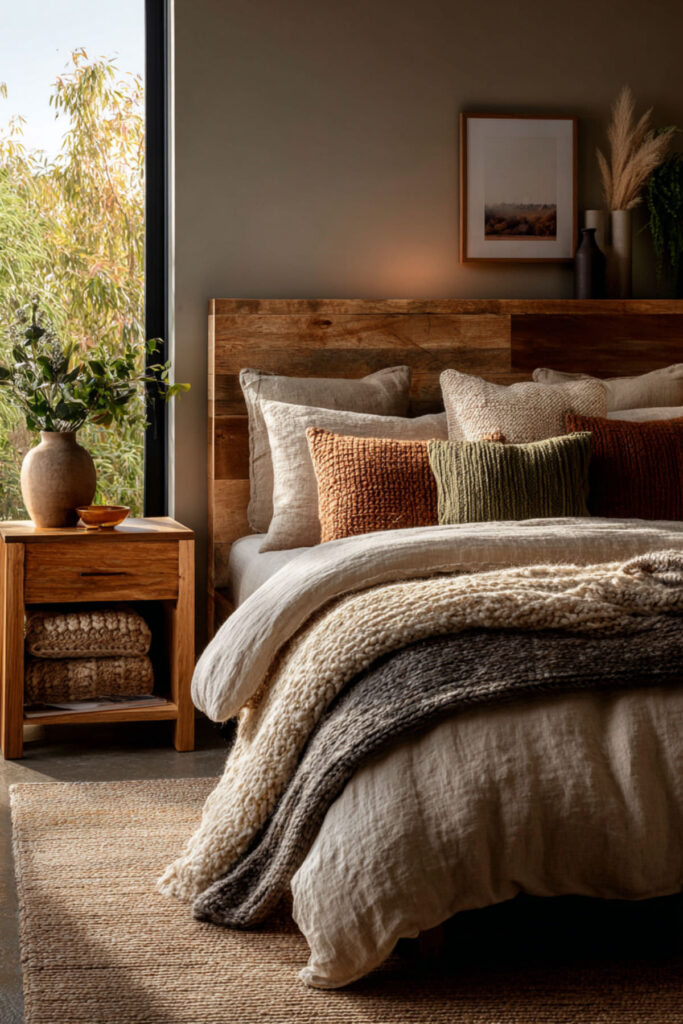
A throw blanket at the foot of the bed — in warm brown, muted terracotta, soft clay, or deep taupe — adds visual weight and physical warmth in the exact place where the bed needs it most. Natural-fiber throws (cotton, wool, alpaca) are heavier and warmer than synthetic alternatives, and their slightly textured surfaces add tactile interest that smooth fabrics can’t. The earth tone keeps the blanket integrated with the room’s palette while adding a layer of color depth that prevents the bed from looking too monochrome. I recommend a chunky cotton or wool throw blanket in a warm earth tone (warm brown, muted terracotta, taupe, or deep olive) draped at the foot of the bed or folded across the bottom third. This cozy boho bedroom and cozy style bedroom idea adds the final layer of warmth that makes the bed look and feel complete.
Japandi-Style Furniture: Where Slow Living East Meets West
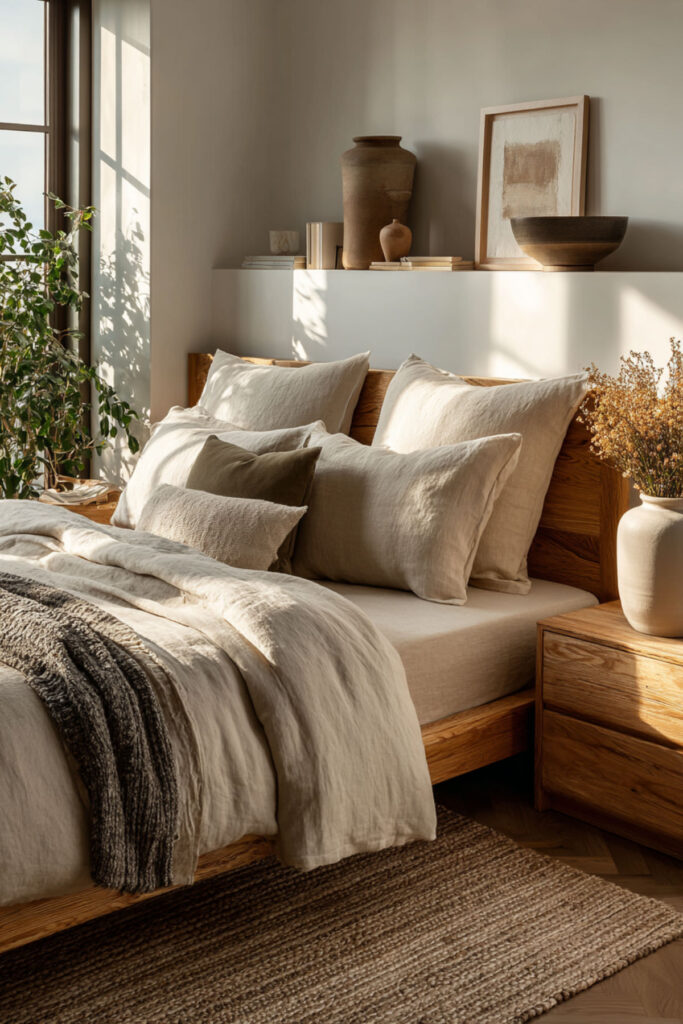
Japandi — the fusion of Japanese minimalism and Scandinavian warmth — produces furniture that is the physical embodiment of slow living: simple, functional, made from natural materials, and designed so that nothing is wasted. A Japandi nightstand is low-profile, clean-lined, and made from light or warm-toned wood. A Japandi dresser has hidden storage and minimal hardware. Every piece exists to serve a purpose and to look quietly beautiful while doing it. The style’s emphasis on craftsmanship and natural materials aligns perfectly with slow living’s values of intentionality and quality. I recommend Japandi-style furniture in natural oak or warm wood with clean lines, minimal hardware, and visible wood grain — matching nightstands, a low-profile dresser, and open shelving that holds only what matters. This Japanese decor style and Japanese inspired bedroom decor idea creates a room where every piece of furniture reinforces the slow living philosophy.
A Journaling or Reading Corner: Slow Living Needs a Slow Ritual Space
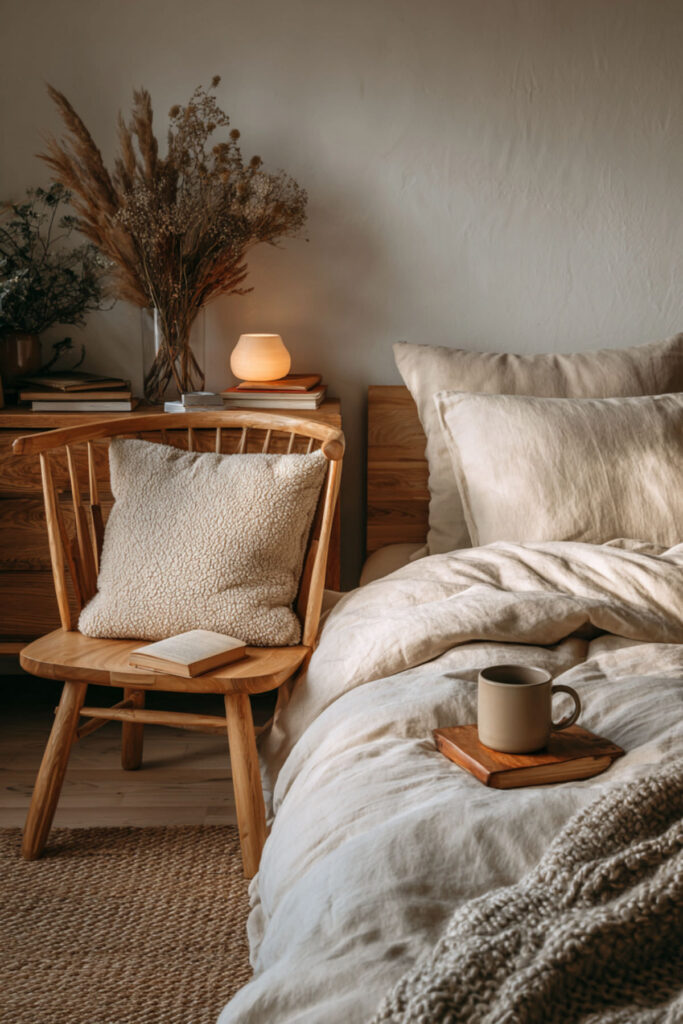
A bedroom designed only for sleep misses the point of slow living, because slow living isn’t just about rest — it’s about presence. A small reading or journaling corner (an armchair or floor cushion, a small side table, a warm lamp) gives you a place in the room that isn’t the bed — a place for the rituals that slow living is built around: morning journaling, evening reading, quiet tea, sitting with your own thoughts. The ritual space doesn’t need to be large, but it needs to feel separate from the sleeping space. I recommend a comfortable armchair or oversized floor cushion in a natural fabric (linen, cotton, wool) placed in a corner of the room with a small wooden side table and a warm lamp. This hygge home and mind relaxation idea builds the ritual space that transforms a bedroom from a place you sleep into a place you live slowly.
One Living Plant: The Slow Living Bedroom’s Only Requirement
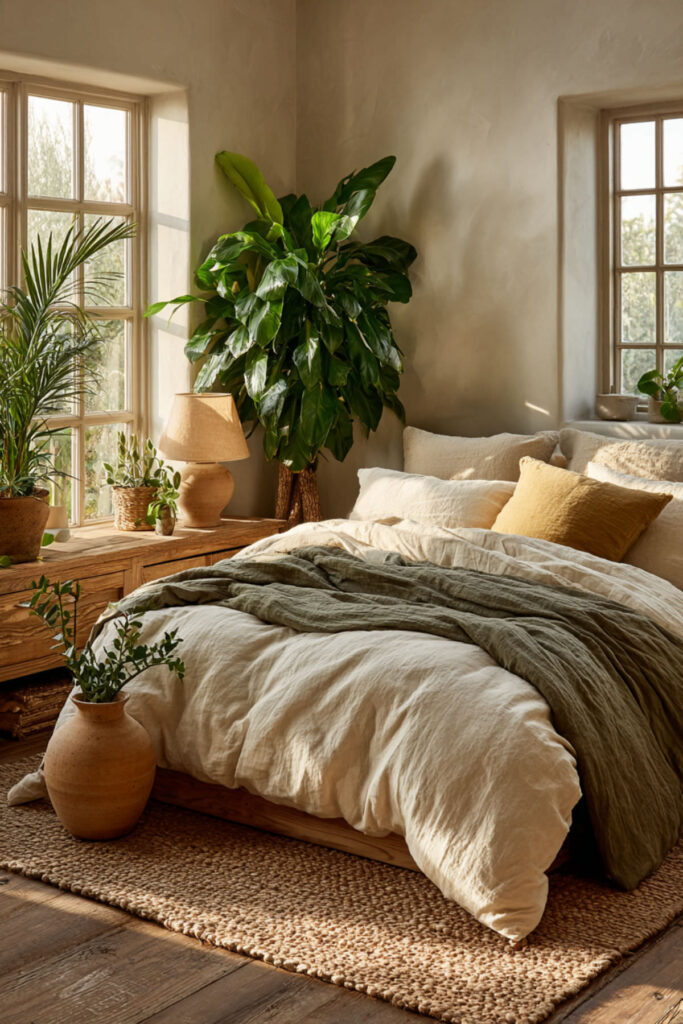
If slow living had a single mandatory design element, it would be a living plant. Not a fake plant, not a dried arrangement (those are beautiful too, and I recommended them earlier), but one real, growing, breathing plant that connects the room to the cycle of life. Watering it is a slow ritual. Watching it grow is a slow observation. Positioning it in the right light is a slow negotiation between your needs and nature’s. A snake plant, pothos, rubber plant, or ZZ plant requires almost no care and still brings that irreplaceable sense of organic life to the room. I recommend one low-maintenance living plant (snake plant, pothos, ZZ plant, or rubber plant) in a terracotta or ceramic pot placed where it can receive indirect light — on a shelf, dresser, or windowsill. This cozy plant bedroom and soft natural bedroom idea is the one element that brings actual nature — not just nature-inspired color — into the room.
The Slow Living Bedroom Is Never Finished: It Evolves with You

This is the idea that holds all the other ideas together: a slow living bedroom is not a project with a completion date. It’s a living space that changes as you change — a new ceramic from a trip, a throw blanket you’ve been eyeing for months, a different plant when the old one outgrows its pot, a wall color that evolves when you evolve. Slow living resists the urge to “finish” a room in a weekend. Instead, it builds the room over time, piece by piece, season by season, so that every object in the room was chosen deliberately and placed with care. The 2026 design world calls this “patina” — the beauty that comes from things that get better as they age. I recommend building your earth-toned bedroom gradually, adding one meaningful piece at a time rather than buying everything at once. Let the room be incomplete. Let it grow. This earthy bedroom design ideas and earthy zen bedroom concept is the philosophy that makes a slow living bedroom truly slow — because the room itself becomes a practice, not just a place.
The Room at the Speed of Earth

An earth-toned bedroom doesn’t just look like nature — it moves at nature’s pace. The linen that softens over years. The wood that deepens over decades. The ceramic that holds the fingerprint of the person who made it. The plant that grows an inch a month. Every element in the room is operating on a timeline that the rest of your life doesn’t follow, and that’s exactly why it works. When everything else is fast, the room is slow. When everything else demands, the room holds. Take a look at these Blue Earthy Bedroom Ideas for Gen Z Women Who Love Indie Room Vibes for a bedroom that feels relaxed, creative, and effortlessly aesthetic.
Pin the ideas that felt like permission to slow down. Save the palettes that grounded you. And when you want to keep building — more textures, more natural materials, more ways to turn your home into a place that supports the life you’re choosing — the rest of our site is here. Go slowly. Build beautifully. Let the room become what it needs to become.
These ideas might be perfect to come back to — don’t forget to save them.
If this inspired you, explore my site for more dreamy bedroom inspiration.
⫸ Click Here For Best Selling Sublimation Printers And Products ⫷