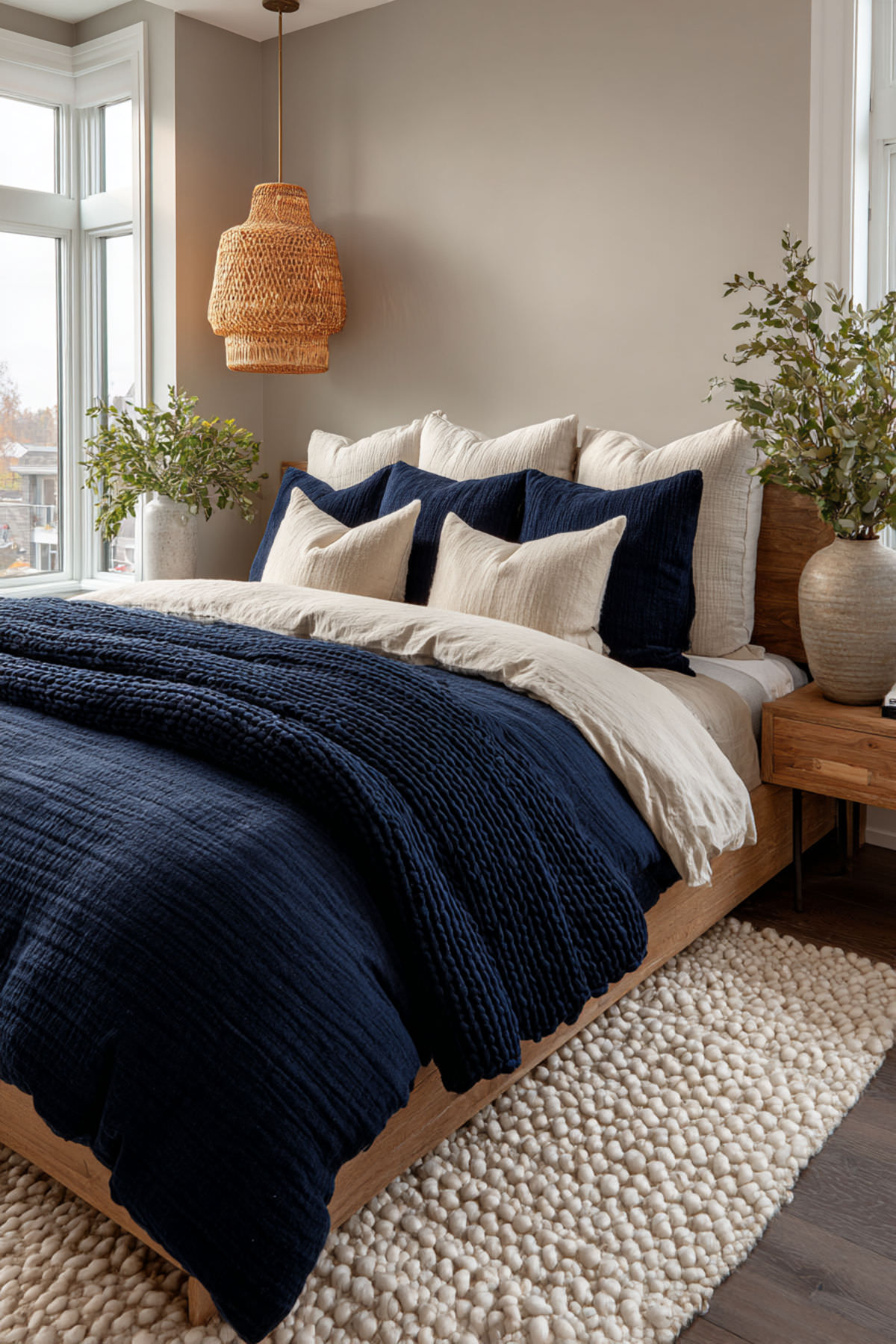
There is a difference between a room that looks like nature and a room that feels like it. Most earthy bedrooms stop at the first version — a green wall, a terracotta pot, a woven basket, done. It photographs well. It checks the Pinterest boxes. But it doesn’t do the thing an organic sanctuary actually needs to do, which is make your nervous system slow down the moment you walk through the door. A room that truly feels organic isn’t about surface-level nature references. It’s about materials that age. Colors that come from the earth rather than approximate it. Textures you can feel without touching. And a palette — olive green and terracotta — that carries the warmth, weight, and emotional groundedness of the actual natural world.
Olive green is the color of foliage after the full brightness of spring has settled into something deeper — muted, complex, carrying hints of brown and yellow inside the green. It represents growth and renewal without the intensity of brighter greens, and it reads as sophisticated rather than decorative. Terracotta is literally earth — fired clay, the reddish-brown warmth of sun-baked soil and ancient Mediterranean walls. Together, they create a palette that designers consistently describe as grounded and inviting, a combination that evokes stability and natural harmony.
In 2026, earthy color palettes including olive greens, terracottas, and warm browns are dominating bedroom design because they create environments that reduce stimulation and promote rest. Research on biophilic bedroom design notes that warm earthy tones like terracotta and sage green appear to reduce physiological arousal compared to saturated primary colors. Here are 16 ideas for building that room. Products and guidance throughout. Pin the ones that feel like the sanctuary you’ve been trying to name. These suggestions are decorative inspirations rather than scientific claims, and certain scenes may be fictional.
Olive Green Walls: The Living Foundation of the Green Bedroom
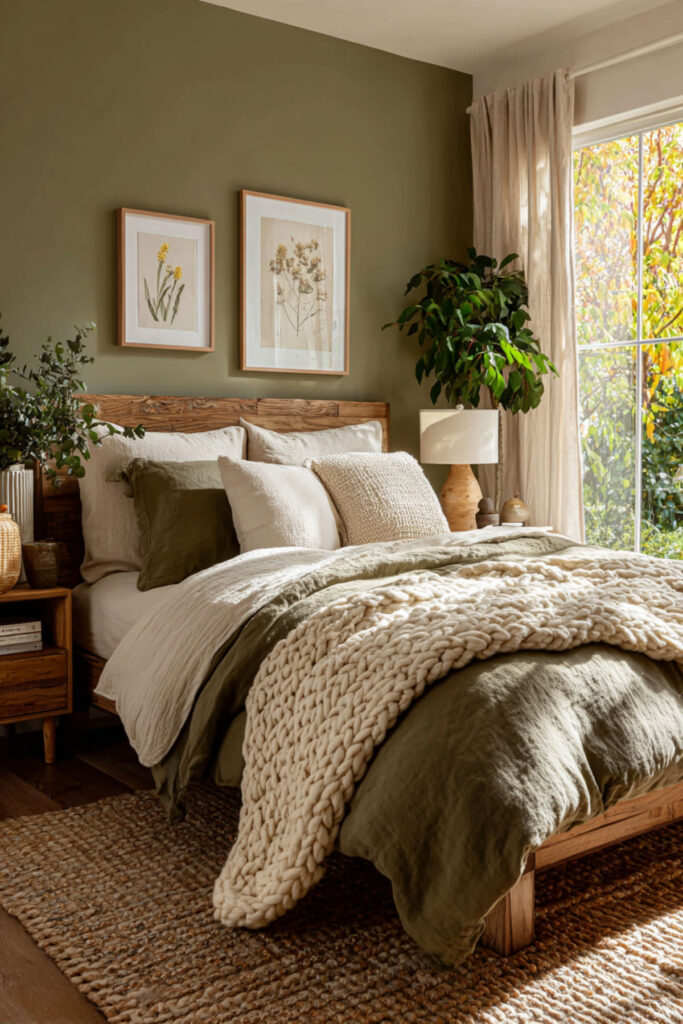
Olive green on all four walls creates a room that feels like being inside a forest canopy at dusk — warm, enclosed, alive. Unlike brighter greens that energize, olive absorbs light and calms the space, creating the muted, grounded atmosphere that an organic sanctuary needs. The color shifts beautifully with natural light (reading greener in daylight, warmer and browner under lamplight), which means the room changes organically throughout the day without you touching anything. Matte finish deepens the effect and keeps the walls from reflecting light. I recommend olive green interior wall paint in matte finish on all four walls. Choose a shade with warm undertones — olive should feel like it has brown and gold inside it, not grey. This olive green bedroom and olive green bedroom ideas foundation builds the room’s entire atmosphere from the walls inward — the living color that holds everything else.
Terracotta Accents: Warm Earth Against Deep Green
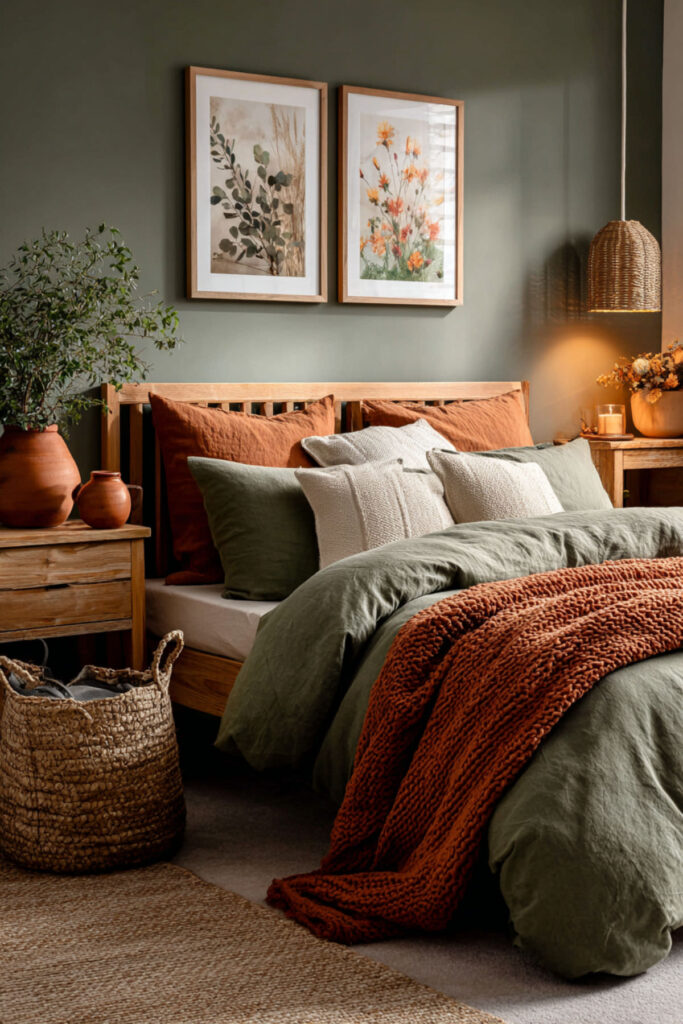
Terracotta against olive green creates the palette that references the natural world most directly — green foliage against reddish earth, the combination you see in Mediterranean landscapes, desert gardens, and autumn fields. The warmth of terracotta (its reddish-brown glow) activates the olive green’s depth, pulling out its warm undertones and creating a dialogue between two earth tones that feels ancient and instinctive. I recommend terracotta accents in three to five places: throw pillows, a ceramic pot or vase, a piece of art, and one textile (a throw blanket or area rug border). Keep the terracotta muted rather than bright — dusty, clay-toned, not orange. This green and terracotta bedroom and terracotta and green bedroom idea introduces the second earth tone that transforms olive green from a color choice into a landscape — the warmth that makes the green room feel like a place.
Linen Bedding in Natural Tones: The Texture That Breathes
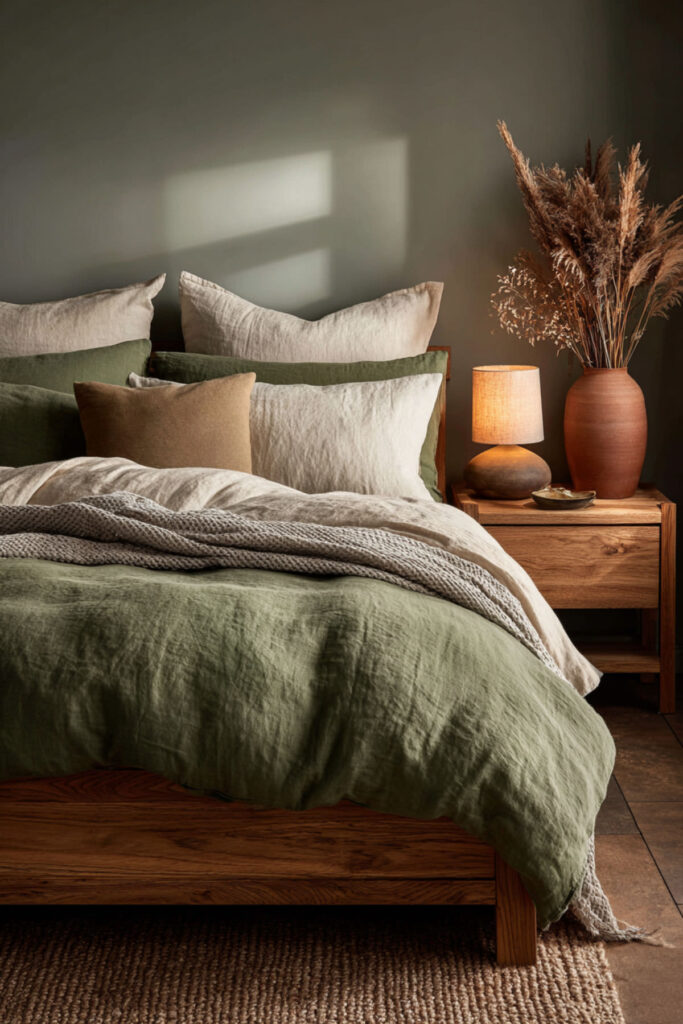
Linen is the textile of an organic sanctuary — it’s made from flax (a plant), it breathes and regulates temperature naturally, it gets softer with every wash without losing its structure, and its slightly rumpled texture looks beautiful without being perfectly made. Natural-toned linen (undyed flax, oat, cream) against olive green walls adds the organic layer that connects the walls to the bed through material rather than just color. The linen’s texture creates visual warmth and a lived-in quality that crisp cotton can’t replicate. I recommend 100% linen sheets and duvet cover in natural, oat, or cream. Don’t iron them — the organic texture is the point. This green bedroom aesthetic and green earthy bedroom idea adds the one textile that makes the bed feel genuinely connected to the natural palette — fabric that came from the earth, for a room inspired by it.
⫸ Click Here For Best Selling Sublimation Printers And Products ⫷Warm Wood Furniture: The Organic Structure
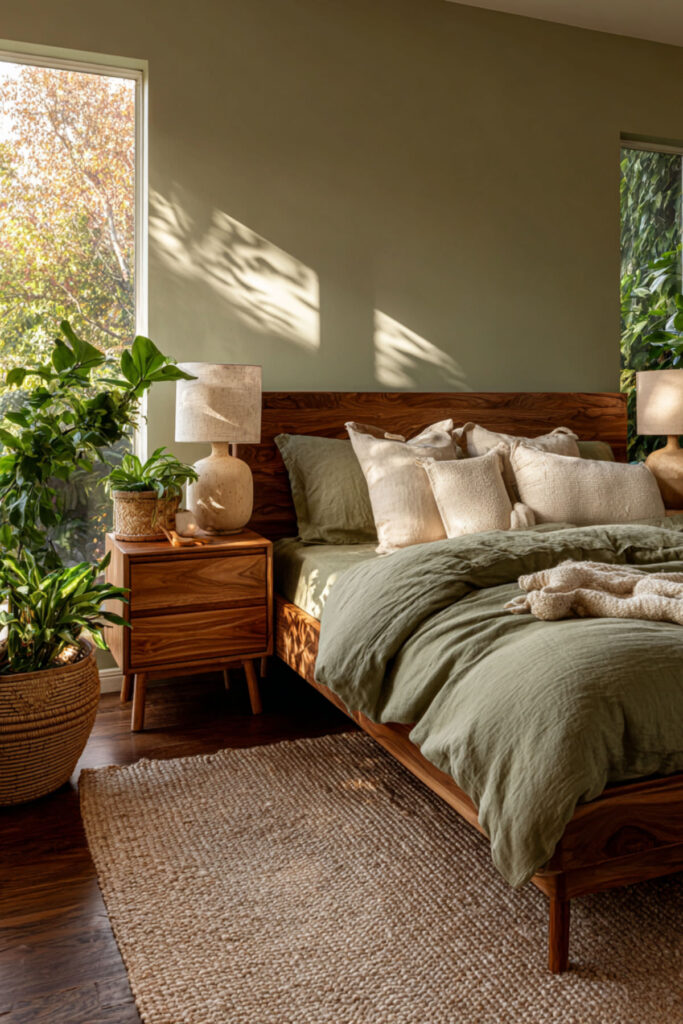
Wood furniture in warm tones — oak, walnut, ash — adds the organic structure that connects the olive walls to the terracotta accents through material. Wood grain provides natural pattern. Wood warmth prevents the olive from reading cold. And the imperfection of real wood (visible grain variation, knots, tonal shifts) reinforces the organic, lived-in quality that manufactured furniture undermines. A solid wood bed frame, nightstands, and a dresser create the structural backbone of the sanctuary. I recommend warm-toned solid wood bed frame, nightstands, and dresser in oak, walnut, or ash with visible grain and minimal finish. This green and wood bedroom and green and brown bedroom idea adds the third natural material (after linen and paint) that gives the room its organic integrity — the structural warmth that holds the sanctuary together.
An Olive Green Accent Wall Behind the Bed: Grounded Focus
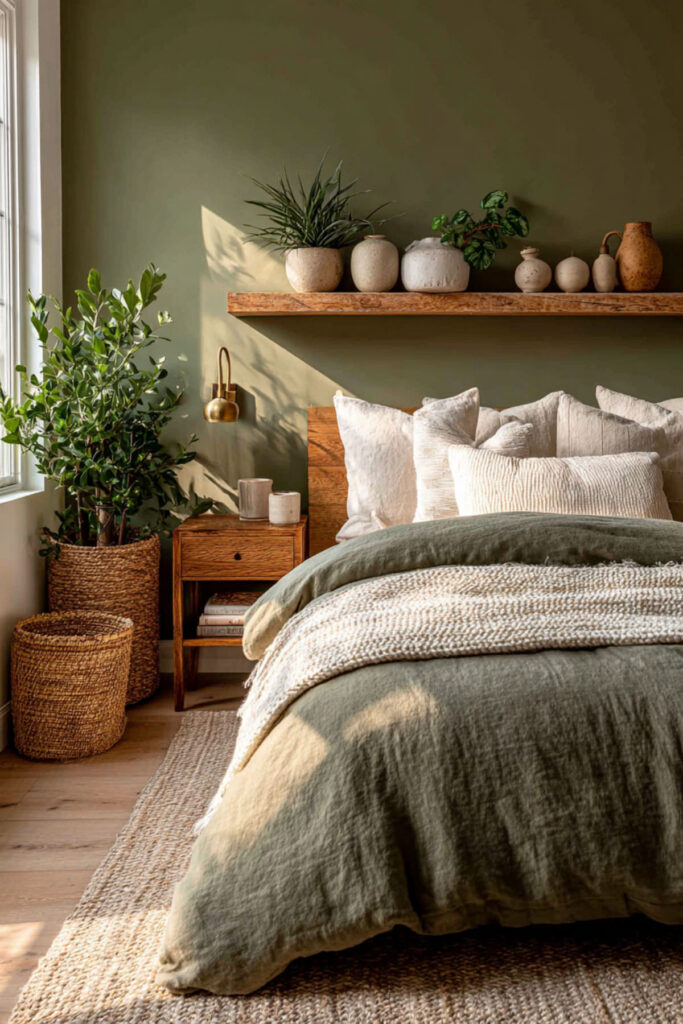
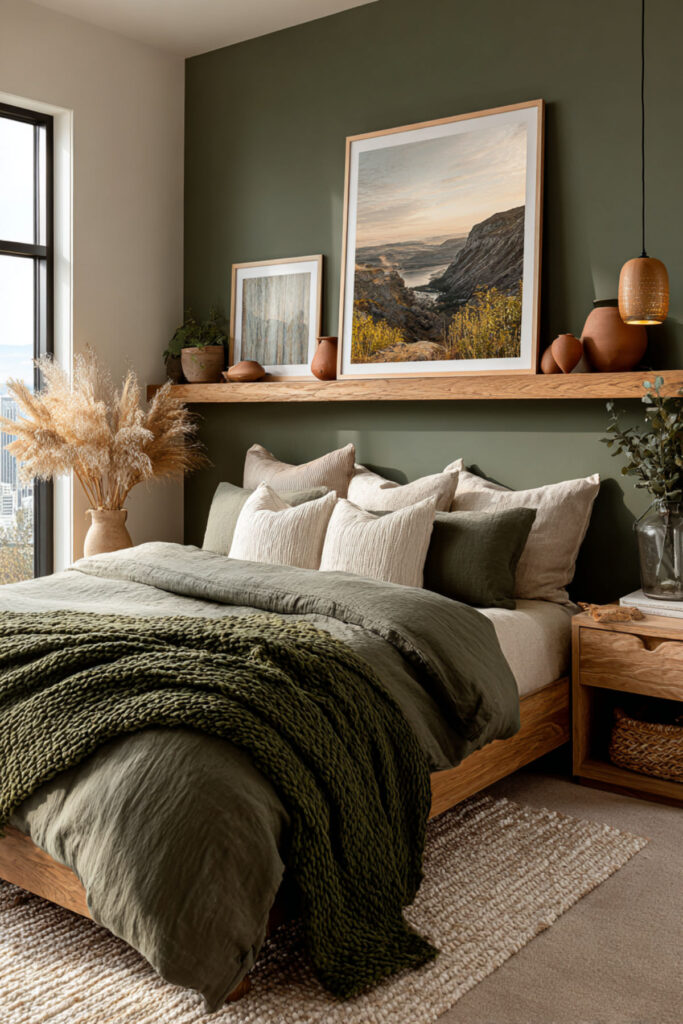
If four olive walls feels like more commitment than you’re ready for, a single accent wall behind the bed creates the grounded focal point that anchors the room’s identity. The remaining three walls in cream, warm white, or soft beige keep the room bright and open while the olive wall defines the bed zone as the room’s emotional center. This approach works especially well in rooms with limited natural light, where four dark walls might feel heavy. I recommend olive green in matte finish on the wall behind the bed, with cream or warm beige on the remaining three walls. This dark green accent wall bedroom and dark green bedroom walls idea focuses the green where it matters most — behind the headboard, in your direct line of sight as you rest.
Warm Ambient Lighting: The Sanctuary’s Evening Shift
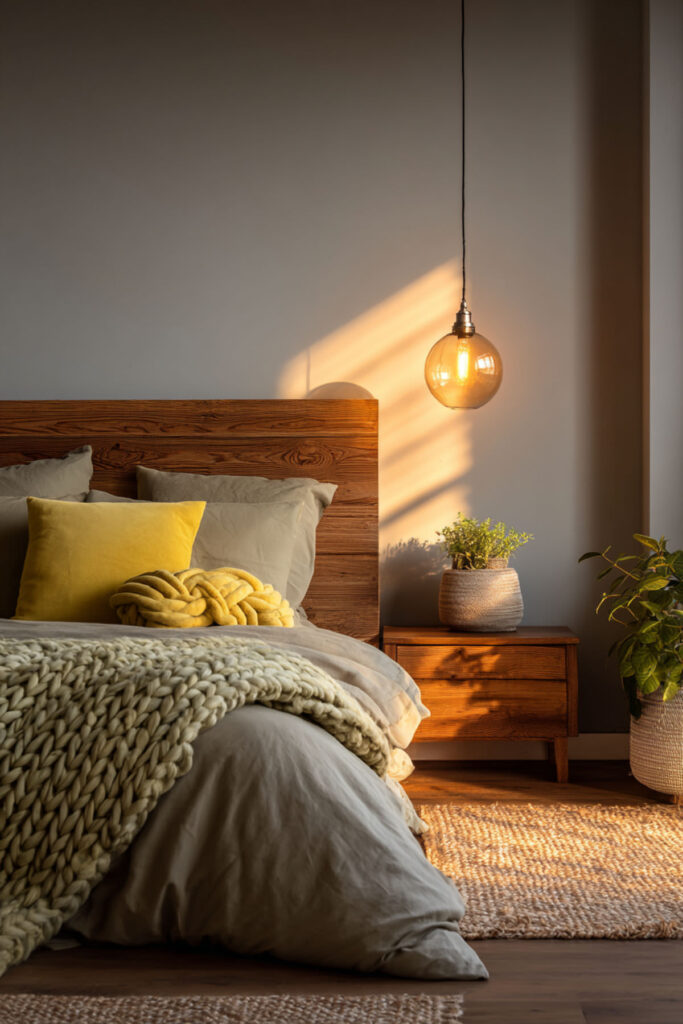
An organic sanctuary needs lighting that matches its palette — warm, amber-toned, and layered across multiple sources. Two table lamps on nightstands provide the mid-level glow. A floor lamp or pair of wall sconces adds vertical light. All sources at 2700K (warm white) create the amber warmth that makes olive green glow golden and terracotta accents deepen. Overhead lighting should be dimmable or eliminated entirely — harsh overhead light flattens the earthy palette and destroys the cocooning atmosphere. I recommend matching warm-toned table lamps with cream or natural linen shades and 2700K LED bulbs on both nightstands, plus a brass or wood floor lamp. No overhead light, or overhead on dimmer at lowest setting. This green bedroom design and sage green bedroom decor idea adds the lighting layer that transforms the room from daytime to evening — the shift where the sanctuary becomes its warmest self.
Olive Green and Cream: The Lightest Earthy Version
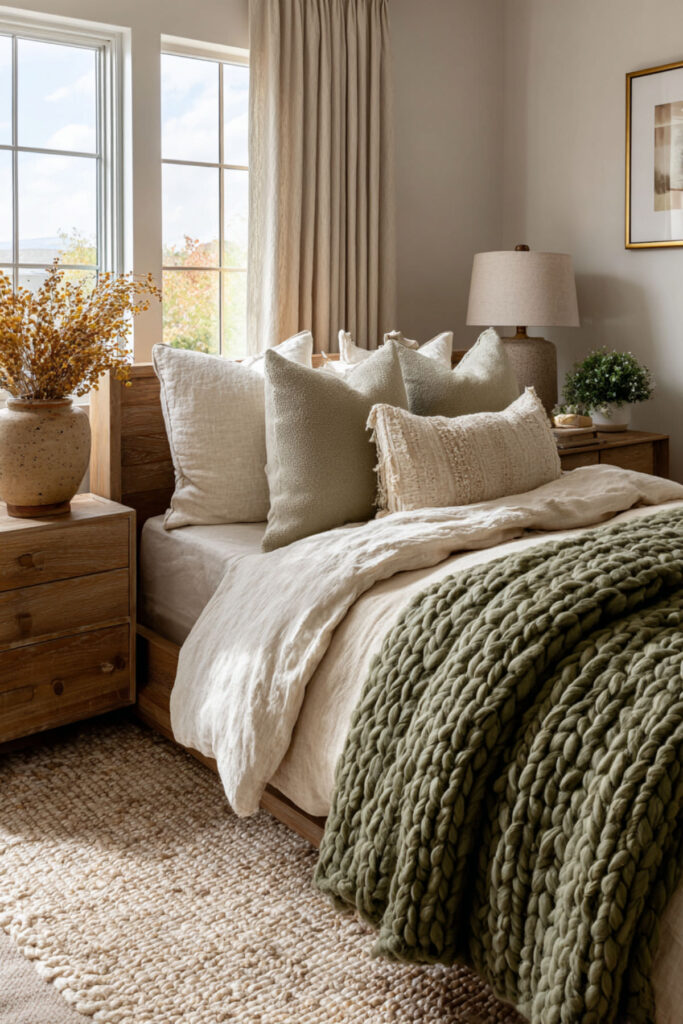
If you love the palette but want maximum brightness, olive green with cream creates the lightest possible version — cream bedding, cream curtains, cream textiles against olive walls produce a room that’s earthy and warm but still open and airy. The cream carries enough warmth to harmonize with the olive (pure white would create too much contrast and read as cold), and the combination references the natural pairing of foliage and light — leaves against a bright sky. I recommend olive green walls with cream duvet cover and sheets, cream linen curtains, and cream accent textiles. Bridge with warm wood furniture and one or two terracotta accents. This green and cream bedroom and cream and green bedroom idea gives you the full organic palette in its most luminous form — grounded without being dark.
A Terracotta Ceramic Piece: Handmade Warmth
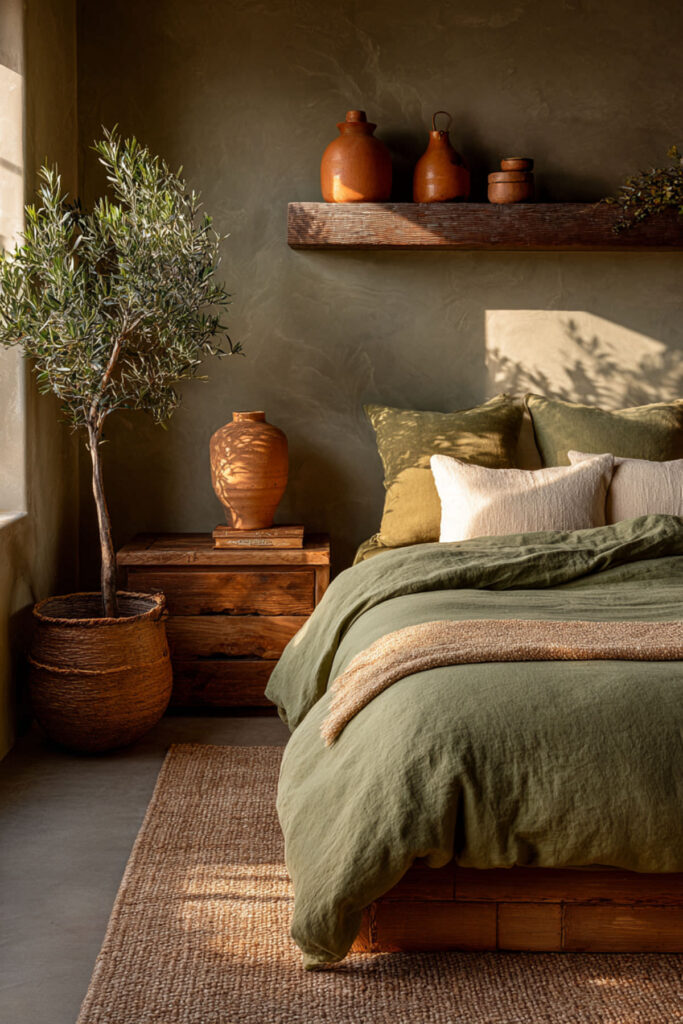
One handmade terracotta ceramic piece — a vase, a bowl, a pot — adds the artisanal quality that an organic sanctuary deserves. Handmade ceramics carry the slight irregularity of human touch (no two are identical), which reinforces the room’s organic philosophy. The terracotta material itself connects to the earth tone palette literally — it is earth, shaped and fired. Placed on the nightstand or dresser, a single ceramic piece becomes the room’s most personally chosen accent. I recommend one handmade terracotta ceramic piece (vase, bowl, or pot) placed on the nightstand or dresser. Choose a piece with visible texture and slight irregularity. This sage green and beige bedroom decor and green bedroom decor idea adds the one handmade object that makes the room feel curated by hand rather than assembled from a catalog — earth holding earth.
A Woven Rug in Warm Neutral Tones: The Ground Beneath the Sanctuary
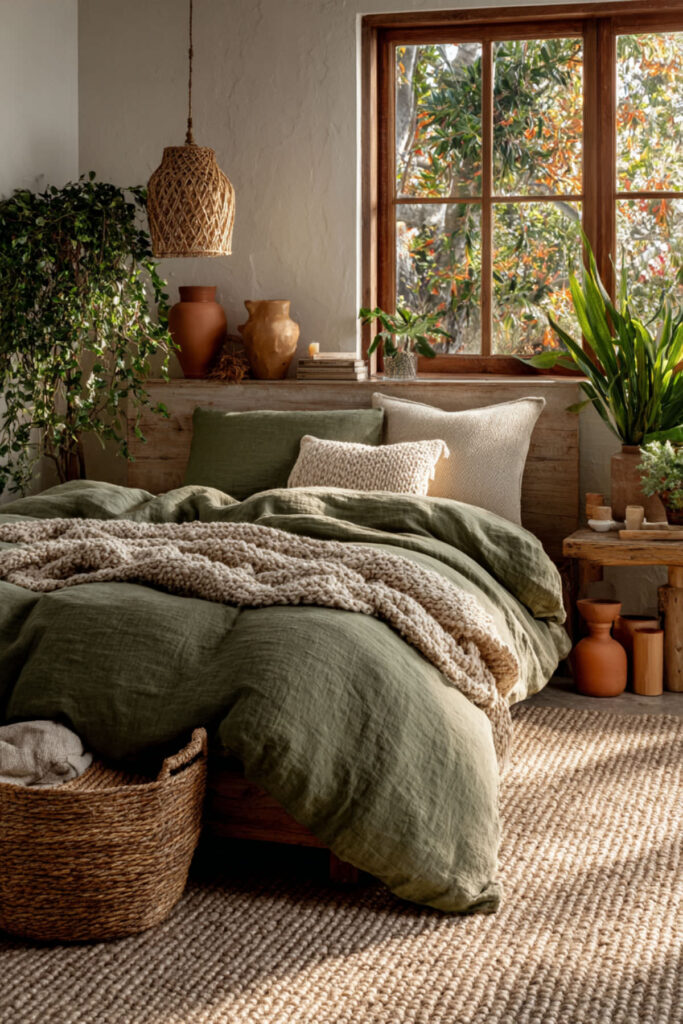
A woven area rug in jute, wool, or a warm neutral blend adds the underfoot layer that completes the room’s sensory experience. Natural fiber rugs (jute, sisal, wool) reinforce the organic material story and add the textural variation that keeps the room interesting without adding visual noise. The rug defines the bed zone, absorbs sound (essential for creating the quiet atmosphere a sanctuary needs), and provides warmth underfoot for every morning and midnight rising. I recommend a large area rug (8×10 or 9×12) in jute, natural wool, or warm neutral woven blend, positioned so it extends at least 24 inches beyond each side of the bed. This earth tone bedroom green and green bedroom colour palettes idea adds the floor layer that grounds every step in organic texture — the surface that touches you first.
Plants in Terracotta Pots: Living Green Inside the Green Room
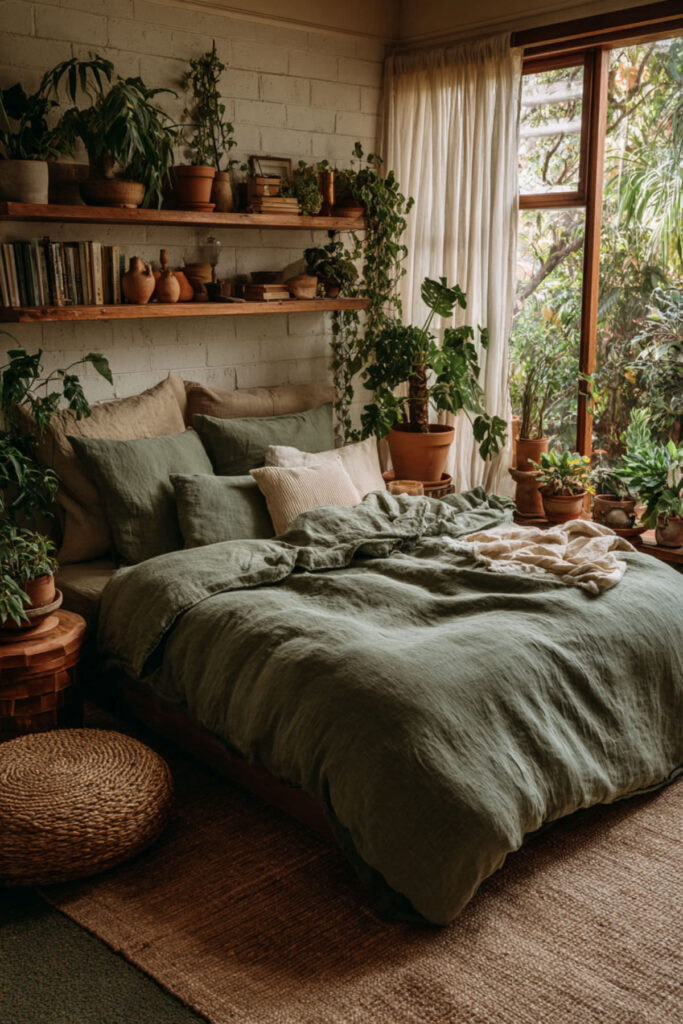
Plants in an olive green room create a layered green palette — the painted walls providing the backdrop, the living plants adding brighter, varied greens that make the room feel genuinely alive rather than just colored green. In terracotta pots, the plants connect the living element to the earth tone accent, and the combination of olive walls, green leaves, and terracotta clay creates the most directly nature-referenced vignette in the room. Two to three plants at varying heights (a trailing pothos on a shelf, a larger monstera in a corner, a snake plant on the dresser) build the layered effect. I recommend two to three low-maintenance plants (pothos, monstera, snake plant, ZZ plant) in terracotta or unglazed clay pots placed at varying heights. This sage green bedroom ideas and green bedroom colour schemes idea adds the living layer that no styled object can replicate — actual nature inside the room that references nature.
Olive Green and Warm Beige: The Softest Organic Approach
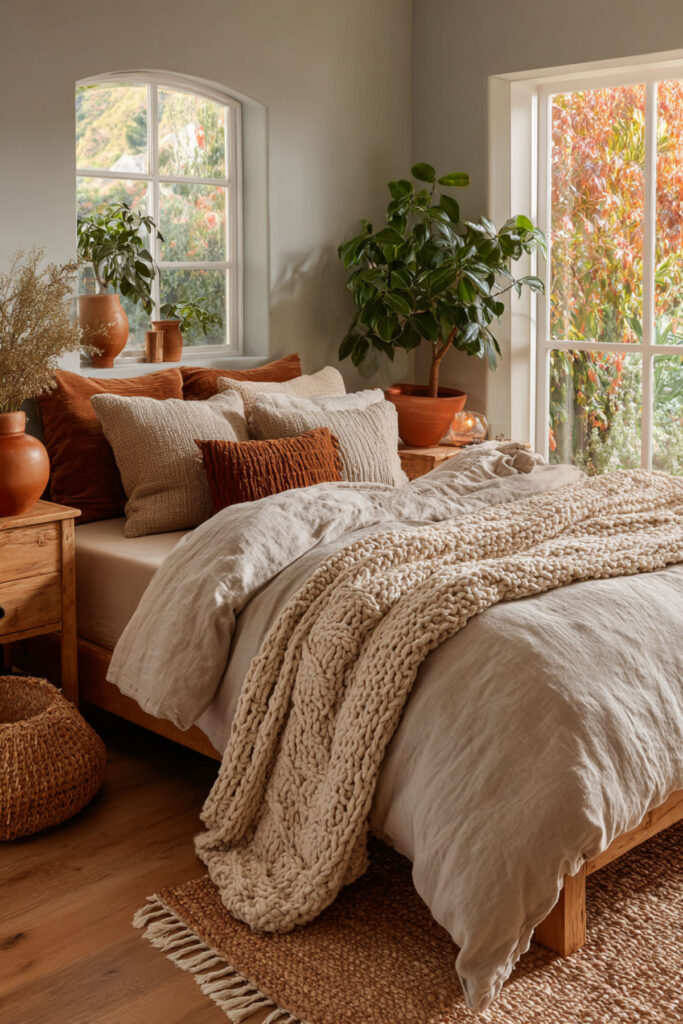
Olive green walls with warm beige bedding, beige curtains, and beige textiles create the softest, most enveloping version of the organic palette. Beige carries more warmth and earthiness than cream, so the room feels like a warm nest rather than a bright space with green walls. This combination is especially effective for women who want the grounding quality of olive green but prefer their bedroom to feel wrapped and held rather than open. I recommend olive green walls with warm beige duvet cover, beige or sand-toned curtains, and warm beige textiles. Bridge with natural wood furniture and terracotta accents. This olive green and beige bedroom and green and beige bedroom idea creates the version that feels like being held by the earth — maximum warmth, maximum organic softness, the sanctuary at its most nurturing.
Blackout Curtains in Olive or Cream: Protecting the Rest
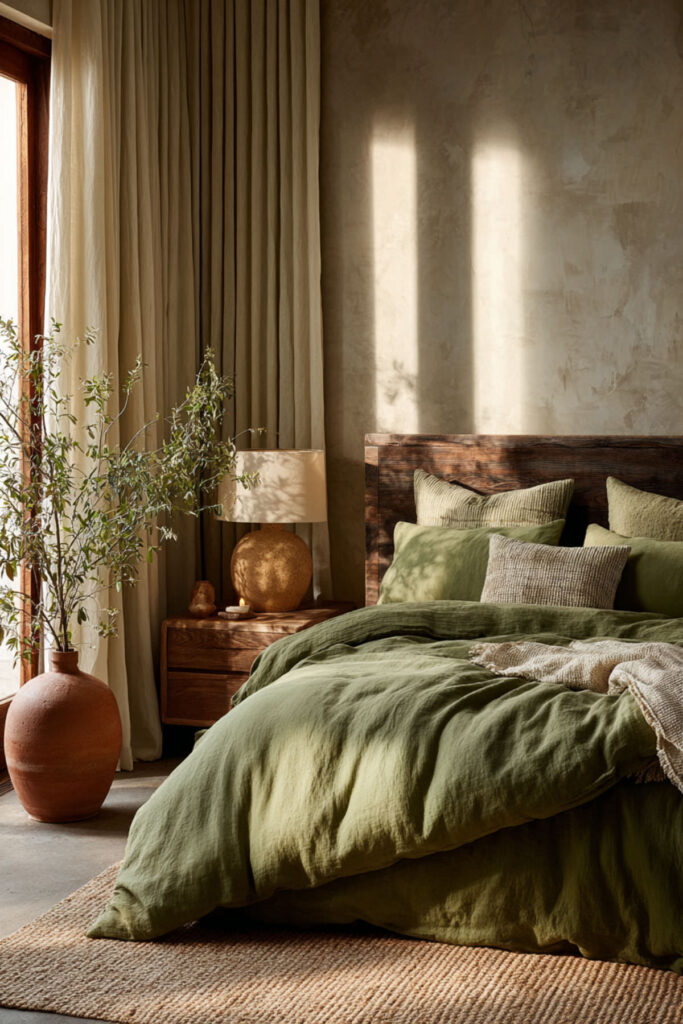
In a sanctuary built for restoration, protecting sleep quality isn’t optional — it’s the room’s primary function. Blackout curtains block the external light that shortens sleep and disrupts the body’s circadian rhythm. In olive green, the curtains extend the wall color across the window for a seamless, immersive effect. In cream, they add brightness to the window wall and soften the room’s overall depth. Floor-length, hung at ceiling height, with fabric that falls in relaxed folds. I recommend floor-length blackout curtains in olive green or cream, hung at ceiling height and extending three to four inches beyond the window frame on each side. This dark green bedroom ideas and dark green bedroom aesthetic idea does the most functionally important job in the organic sanctuary: ensuring that the restorative space actually restores.
A Scented Candle in Eucalyptus, Fig, or Cedarwood: The Invisible Forest
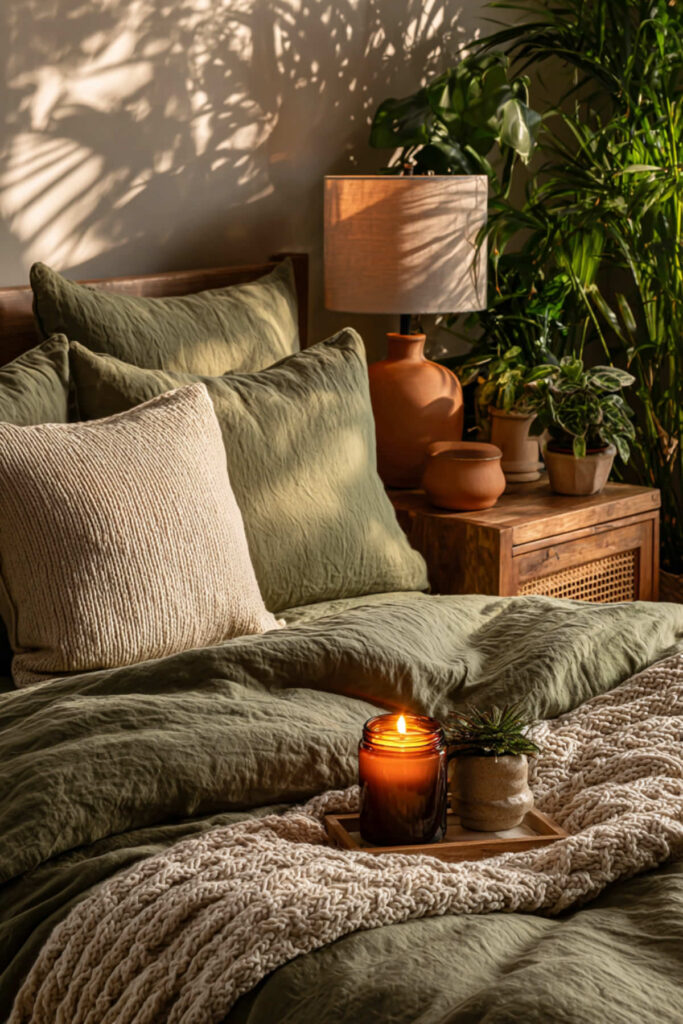
Scent completes the organic sanctuary by extending the nature reference from visual and tactile into olfactory. Eucalyptus, fig, cedarwood, and vetiver are the fragrance families that match olive green and terracotta — green, woody, earthy, and grounding. Activated in the evening, the scent becomes the room’s invisible atmosphere, a neurological cue that this space means rest and restoration. Over time, the scent-rest association strengthens, and lighting the candle begins triggering the relaxation response before you’re even in bed. I recommend one high-quality scented candle in eucalyptus, fig, cedarwood, or vetiver, in a ceramic, terracotta, or amber glass vessel, placed on the dresser or nightstand and lit 20 to 30 minutes before bed. This green bedroom decor and sage green bedroom idea adds the sensory layer that makes the sanctuary three-dimensional — the invisible forest that enters the room before you close your eyes.
A Reading Corner with a Linen-Covered Chair: The Room’s Second Zone
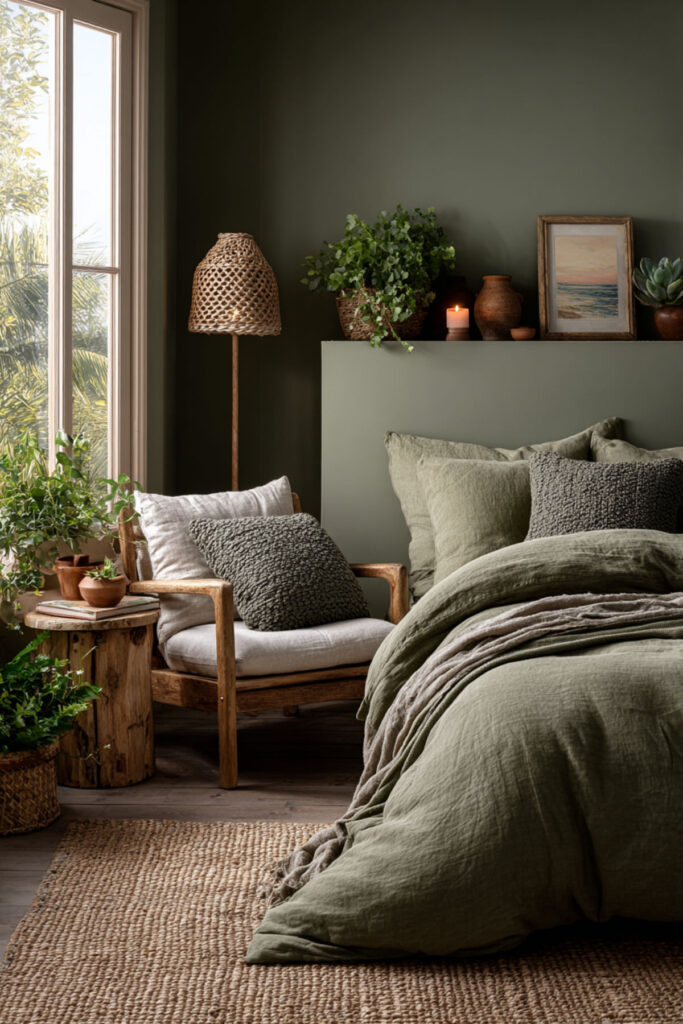
Every well-designed sanctuary has a second zone — a place that isn’t the bed where sitting, reading, journaling, and simply being can happen. A comfortable armchair or floor cushion in natural linen or warm cotton, positioned near the window with a warm lamp and a small wood side table, creates this zone. The linen upholstery connects to the bedding, the wood connects to the furniture, and the position near the window gives the corner the natural light that reading and quiet rituals need. I recommend a comfortable armchair in natural linen or warm cotton, or a large floor cushion, positioned near the window with a warm-toned floor or table lamp and a small wood side table. This sage green walls bedroom ideas and green bedroom color schemes idea gives the sanctuary its second anchor — the zone where restoration becomes active rather than passive.
Uncluttered Surfaces with One Intentional Object: Edited Simplicity
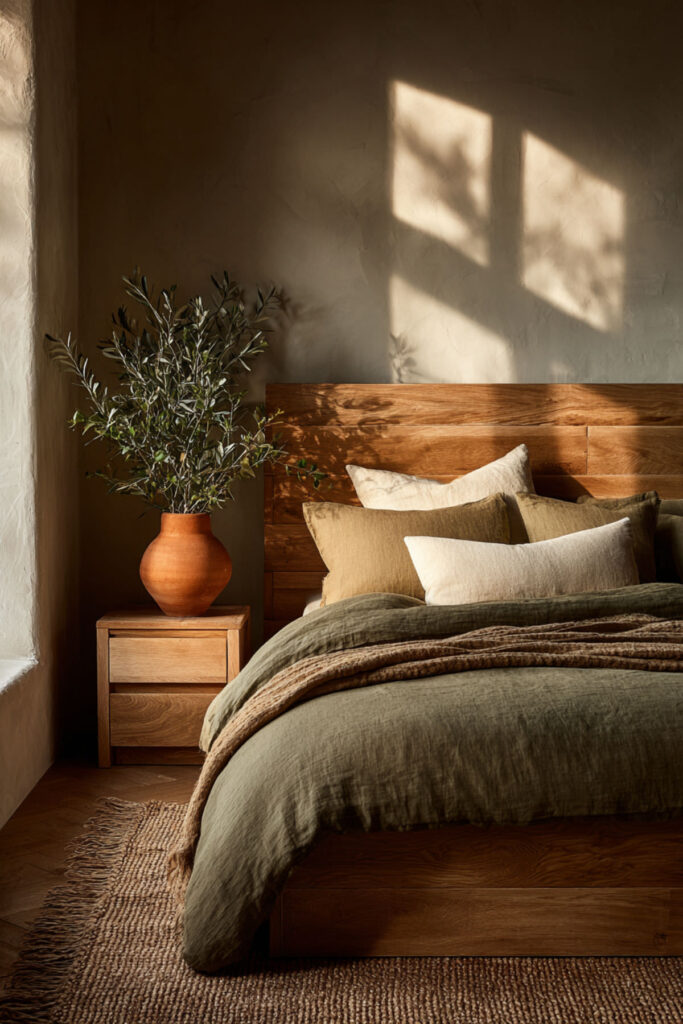
An organic sanctuary requires visual quiet. That means each surface — nightstands, dresser top, windowsill — holds one intentional object rather than an accumulation. One nightstand holds a lamp and a book. The other holds a lamp and a candle. The dresser holds the ceramic piece and a small plant. The intention isn’t minimalism for its own sake — it’s creating the visual calm that allows the earthy palette and natural textures to do their work without competing with clutter. I recommend scanning each surface and editing to one or two intentional objects per surface. Everything else goes in a drawer, on a shelf, or out of the room. This light sage green bedroom and sage color bedroom idea builds the visual quiet that makes the organic palette effective — uncluttered surfaces that let the room’s materials and colors breathe.
An Organic Sanctuary Is Not a Style — It’s a Practice
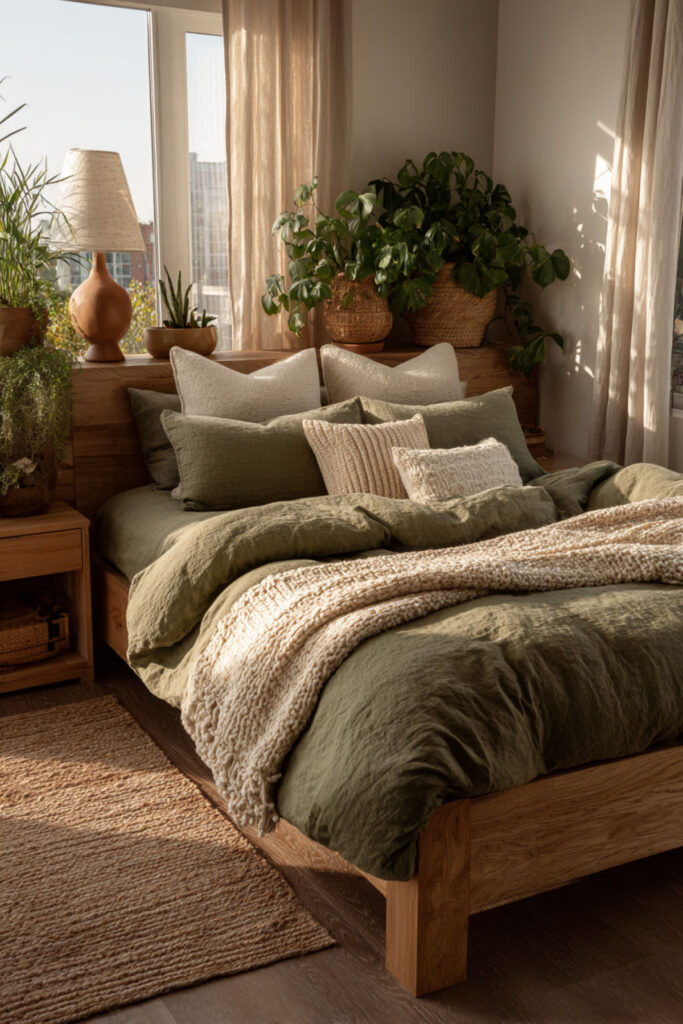
This final idea is about what the room means once it’s built. An organic sanctuary isn’t a Pinterest board you execute once and forget. It’s a practice — a daily relationship with a space that supports your restoration. The candle gets lit. The surfaces stay clear. The bed gets made with care (or with the beautiful carelessness that linen allows). The plants get watered. The room gets your attention because the room gives you its attention back: the olive green that soothes without stimulating, the terracotta that warms without demanding, the linen that softens with every wash, the wood that ages into something more beautiful. I recommend treating this room as a practice, not a project. The sanctuary isn’t finished when the last pillow is placed. It’s maintained every evening, honored every morning, and returned to every time the world outside asks more than you have. This olive green bedroom ideas and green earthy bedroom idea is the most important because it names the truth: the organic sanctuary works because you return to it, and it returns the favor.
The Room That Grows With You
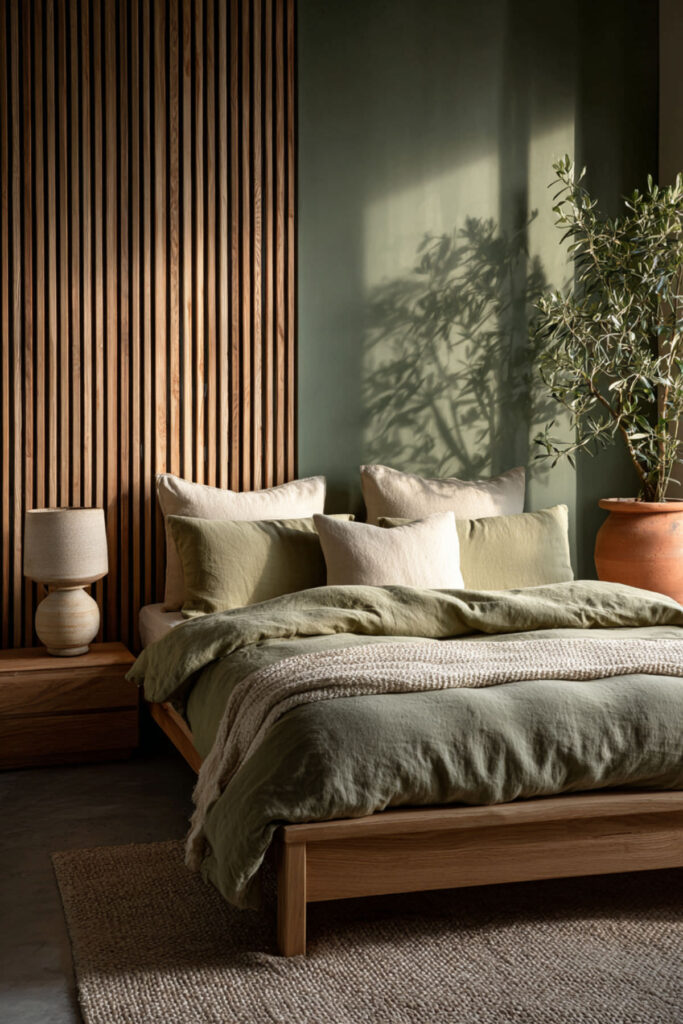
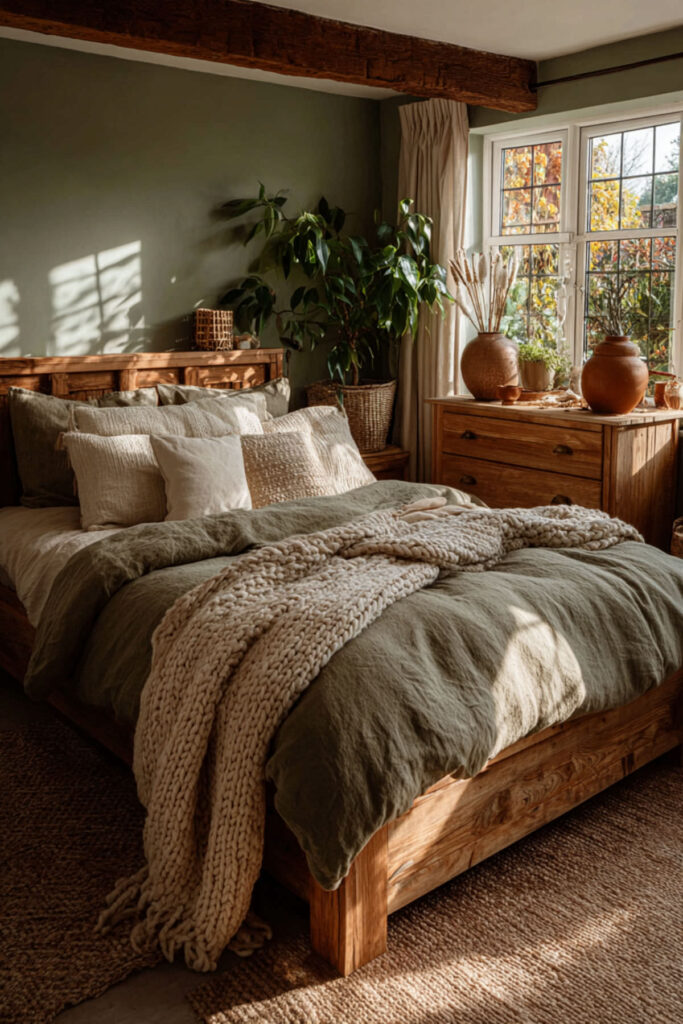
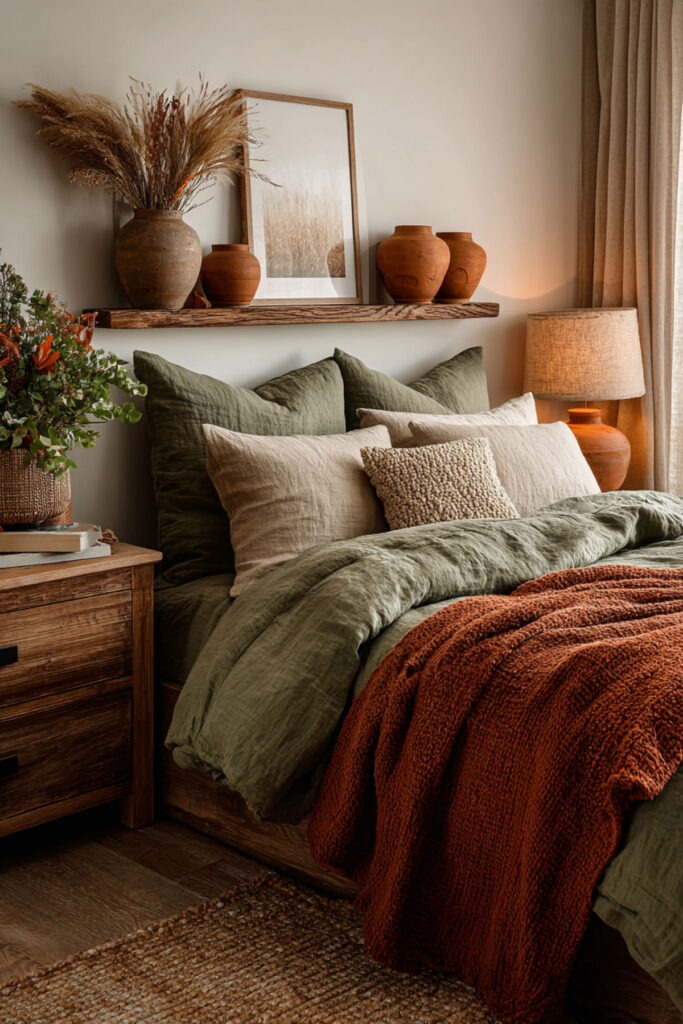
Olive green and terracotta don’t fade. They don’t go out of style. They don’t require a refresh every season or a redesign every time a new trend appears on your feed. They age — the way wood ages, the way linen softens, the way a well-loved ceramic develops the patina of being held. The room you’re building with these materials and this palette isn’t a moment. It’s a habitat. A place that grows quieter as you grow calmer, that gets more beautiful as you get more intentional, that holds exactly what you need because you chose every element with that purpose.
Pin the ideas that felt like your sanctuary. Save the palettes that matched the organic grounding you’ve been scrolling for. And when you need more — more textures, more earth tones, more ways to build a room that feels like the natural world came inside and decided to stay — the rest of our site is here. Your organic sanctuary is waiting. Go grow it. Make sure to read these lavender and warm white bedroom ideas for women creating a soft reset space.
Here are a few more ideas you might want to come back to someday — don’t forget to save them.
Hope this sparked inspiration—there are many more dreamy bedroom ideas waiting on my site.
⫸ Click Here For Best Selling Sublimation Printers And Products ⫷